



|
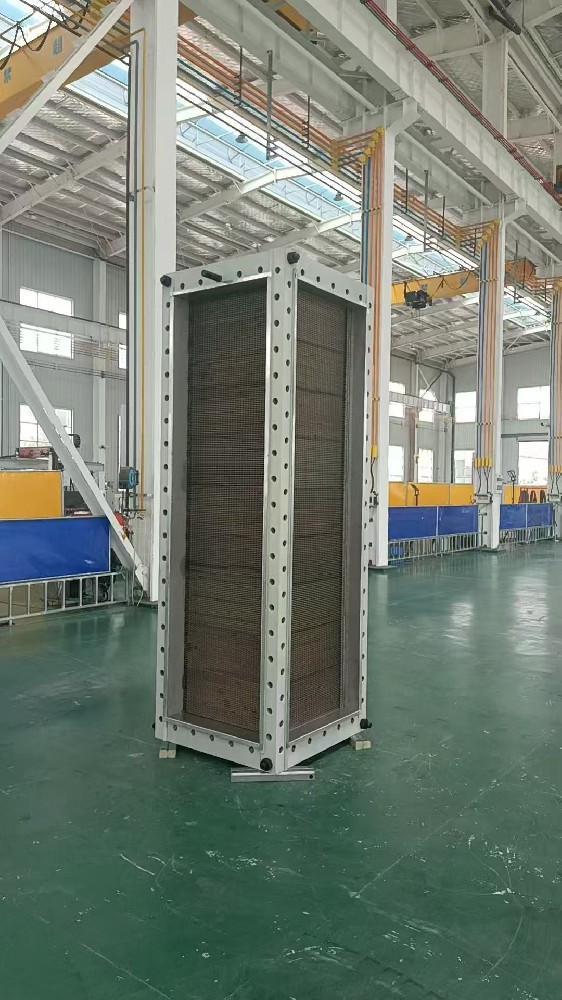
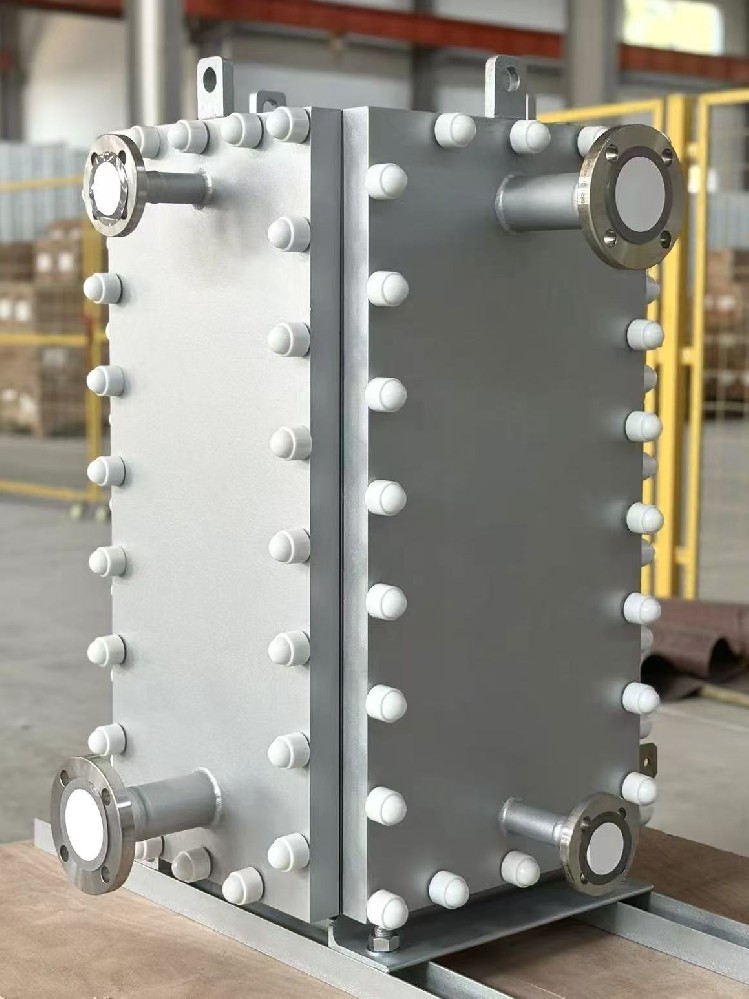
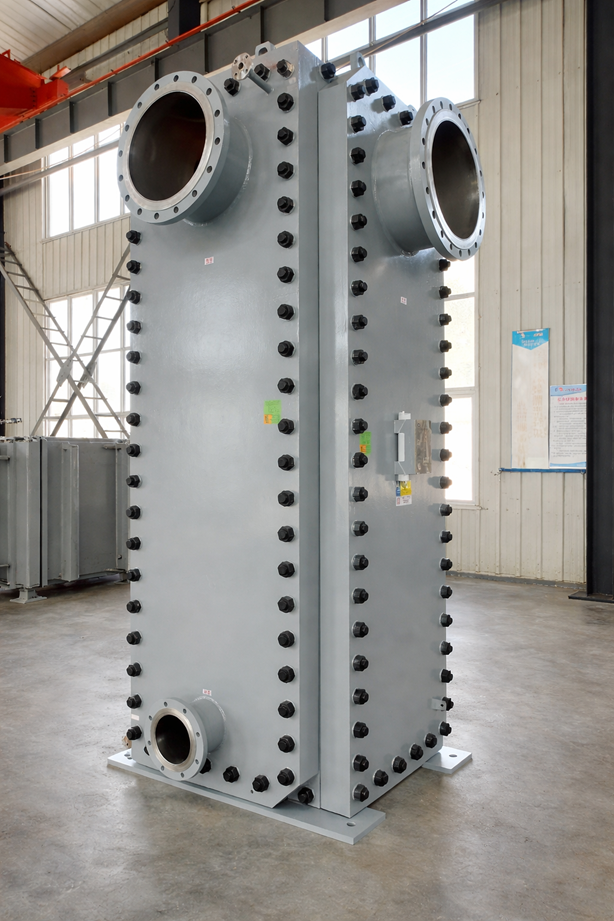
Brazed PHE Design
Brazing the
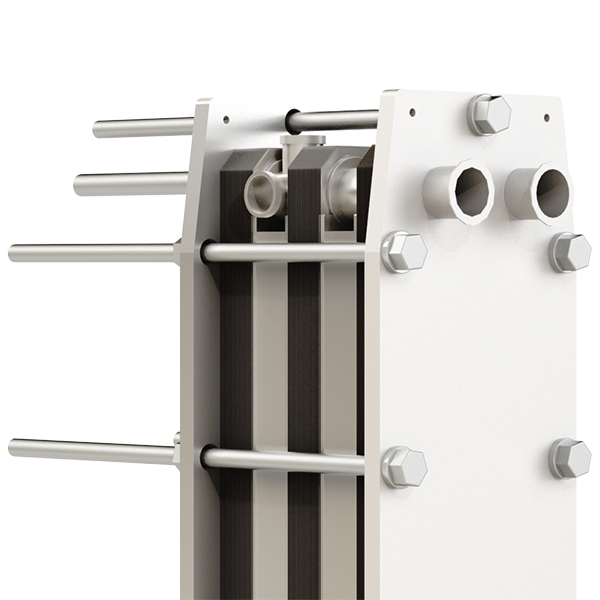
stainless steel plates together eliminates the need for
sealing gaskets and thick frame plates. As well as
holding the plates together at the contact points, the
brazing material seals the package.
Baode's
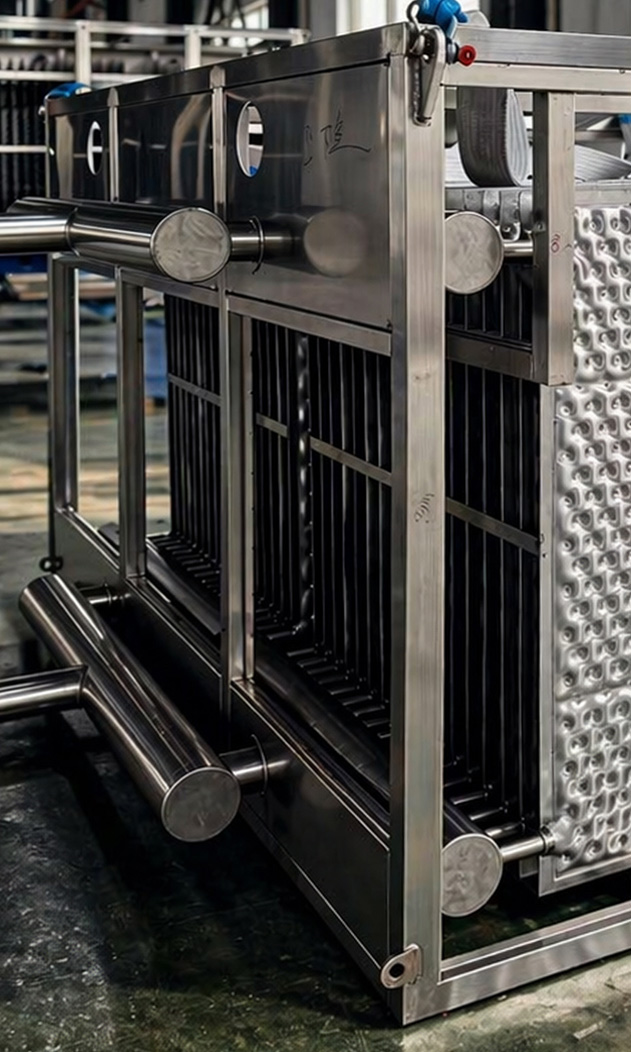
brazed heat exchangers are brazed at all contact points,
ensuring optimal heat transfer efficiency and pressure
resistance. The plates are designed to achieve longest
possible lifetimes. Since virtually all material is used
for heat transfer, the Brazed Plate Heat Exchanger is very compact in size and
has a low weight and a low hold-up volume. Baode offers
a flexible design that can be customized to meet
customer-specific requirements. Baode brazed plate heat
exchangers ensure the customer the most cost-efficient
solution for his heat transfer duties.
Material
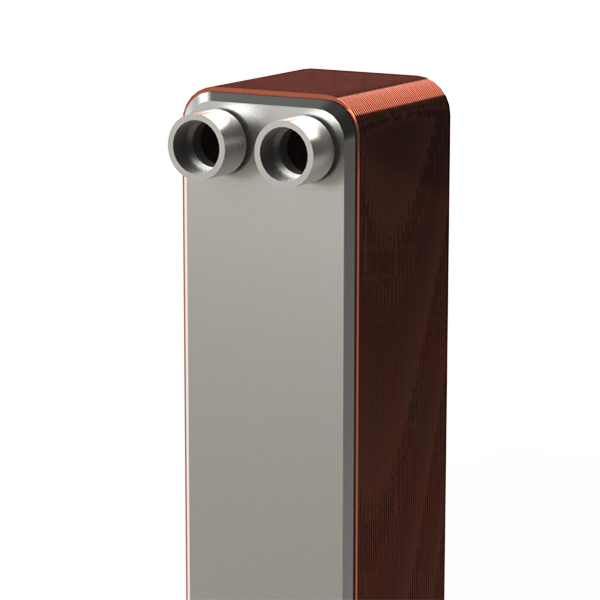
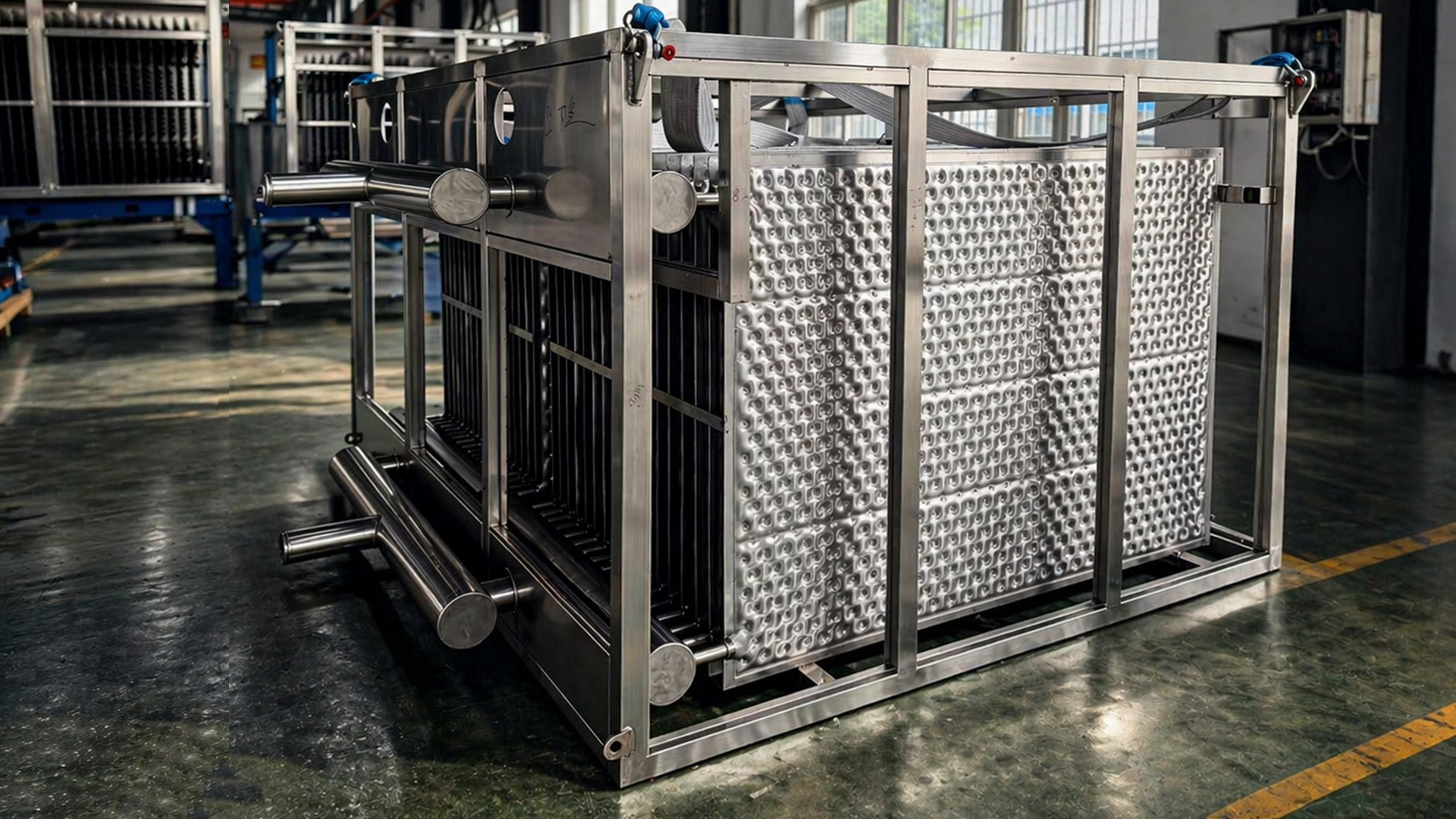
The BPHE (Brazed Plate Heat Exchanger ) consists of thin corrugated
stainless steel plates which are vacuum brazed together
using copper as the brazing material. Copper brazed units can be used for numerous of applications. However,
for food applications and applications involving
aggressive fluids, copper brazed units are not suitable.
Flow principle
The basic flow
principle in a brazed heat exchanger for
HVAC applications is parallel and current flow to achieve
the most efficient heat transfer process. In a single
pass design all connections are located on one side of
the heat exchanger, making installation very easy.
Evaporator flow principle
The channels
formed between the corrugated plates and corners are
arranged so that the two media flow through alternate
channels, always in opposite directions (counter current
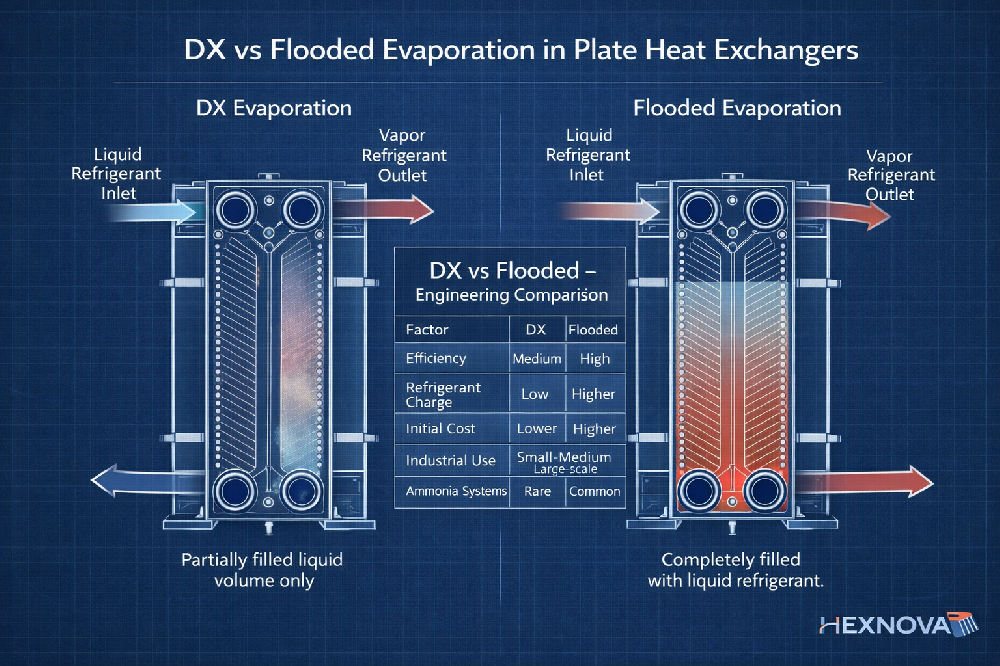
flow). The two phase refrigerant (vapor + liquid)
enters the bottom left of the exchanger with a vapor
quality depending on the operating condition of the
plant. Evaporation of the liquid phase takes place
inside the channels and some degrees of superheat are
always requested, which is the reason why the process is
called "dry expansion". In the enclosed evaporator
picture the dark and light blue arrows show the location
of the refrigerant connections. The water (brine) to be
cooled flows counter current in the opposite channel;
the dark and light red arrows show the location of the
water (brine) connections.
Brazed
plate condensers ¨C flow principle
The main
components are the same as for the evaporator. The
refrigerant enters at top left of the exchanger as hot
gas and starts to condense on the surface of the
channels until fully condensed, and is then slightly
subcooled. The process is called "free condensation". In
the enclosed condenser picture the light and dark blue
arrows show the location of the brine connections. The
refrigerant flows counter current in the opposite
channel and is cooled. The light and dark red arrows
indicate the locations of the refrigerant connections.
Dual system
The real dual
circuit
 patented
by Baode in a solution with diagonal flow is obtained by
means of
pressed
plates. The Brazed Plate Heat Exchanger can be connected with two independent
refrigerant circuits. The special design ensures that
each refrigerant circuit is in contact with the entire
water flow. The main advantage is that at partial load
(only one compressor running) water cooling is uniform
and performance is maximized.
Multipass
The design
options of the brazed heat exchanger are
extensive. The heat exchanger can be designed as a multipass unit,
different types of connections are available, and there
is the option of choosing the location of the
connections. Baode offers a wide range of standard heat
exchanger models and sizes, tailor-made for HVAC
applications and available from stock. Naturally,
customer-specific designs are available on request.
|