
|

1. General of Brazed
Heat Exchanger
installation
Where
possible, Baode
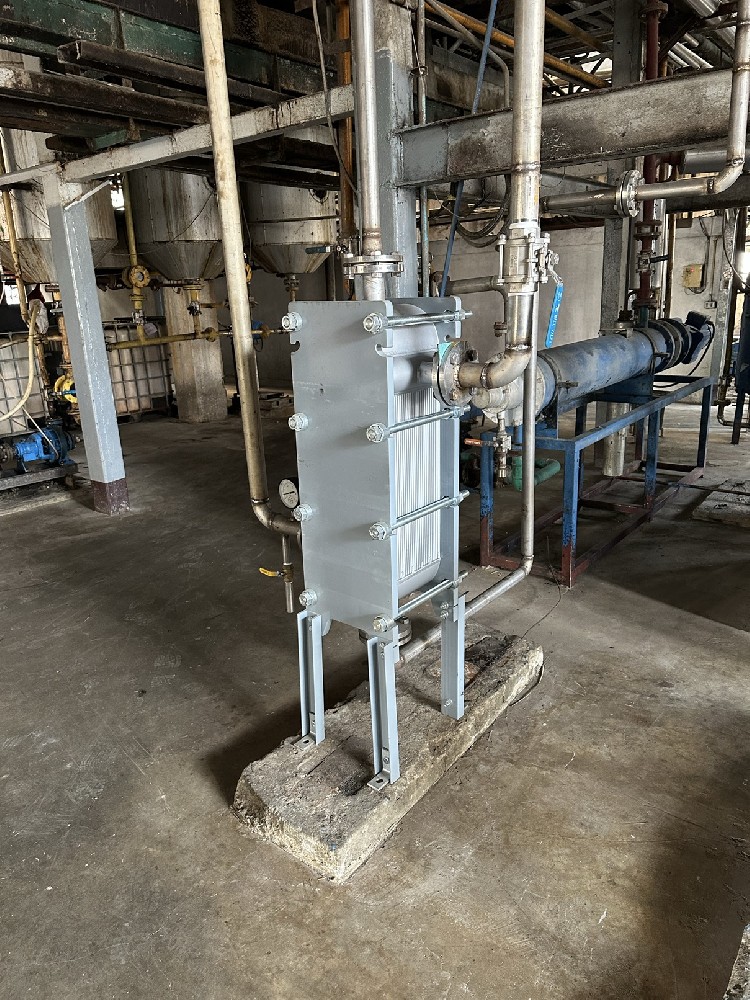
Brazed Heat Exchanger should be mounted in the
vertical position. (See
Fig. 3) Install mufflers or
vibration absorbers as
necessary to make sure
vibration cannot be
transmitted to the heat
exchanger. For larger
connection diameters,
use an expansion device
in the pipeline. A
rubber mounting strip
can serve as a buffer
between the unit and the
mounting clamp. (See
Fig. 4)
2. Connecting to the
system
• Use flexible
connectors. It¡¯s
critical that vibrations
from pipe work and
control valves not be
transferred to the heat
exchanger.
• Don¡¯t over tighten
female unions onto the
threaded connections;
excessive force will
shear the connection
braze. The threads are
parallel. Baode advises
use of a connection with
the female part sealing
against the top of the
heat exchanger
connection. (Check the
chart below for maximum
allowable torque.) Seal
unions with O-rings or
round gaskets at the end
of the connection. Tape
may also be used to seal
the threads.
• Be sure that adequate
expansion/safety valves
are installed into the
adjacent pipe work.
Baode recommends the use
of expansion tanks.
• If pipe work is to be
soldered into the
nozzles on the
exchanger:
¨C Fill the outer circuit
with water; the circuit
must be open to the air.
¨C Wrap a wet towel
around the base of the
connection to be
soldered.
¨C Use solder containing
at least 45 percent
silver.
¨C Never
weld connections onto or
near the exchanger. (See
Fig. 5)
3. Avoiding water
hammer.
Sudden
changes in the velocity
of a noncompressible fluid (such as water)
can result in ¡°water
hammer,¡± a
condition that damages
pipes, valves,
heat exchangers and
other equipment. The quick
closing of a solenoid
valve in liquid lines is
a typical
cause. Sudden
interruptions of the
fluid flow increase
pressure far above
normal levels.
Highintensity pressure
waves then move back and
forth in the pipe
between closure
and relief points. At a
relief point
such as a large-diameter
header, these
waves can strike at
extremely high
speed.
The shock wave produced
in this way can cause
substantial damage as it
alternately expands and
contracts the pipe
lines. In brazed heat
exchangers, water hammer
can deform the front or
back plate into a bulb
shape, with resulting
internal or external
leakage.
An air
chamber or water hammer
arrestor can avoid or
eliminate these
problems. Valves with
controlled closing times
or characteristics can
also control the
problem. (See
Fig. 6)

4. Refrigeration
details
Condensers
Refrigerant gas flows in
at the top left.
Condensate liquid flows
out at bottom left.
Water inlet is at the
bottom right and water
outlet at the top right.
Connect water and
refrigerant for
countercurrent flow.
Regulate and control the
system via the service
medium circuit. Solder
connections to the
refrigerant side when
using Baode Brazed HeatExchangers as
condensers. (See
Fig. 7)

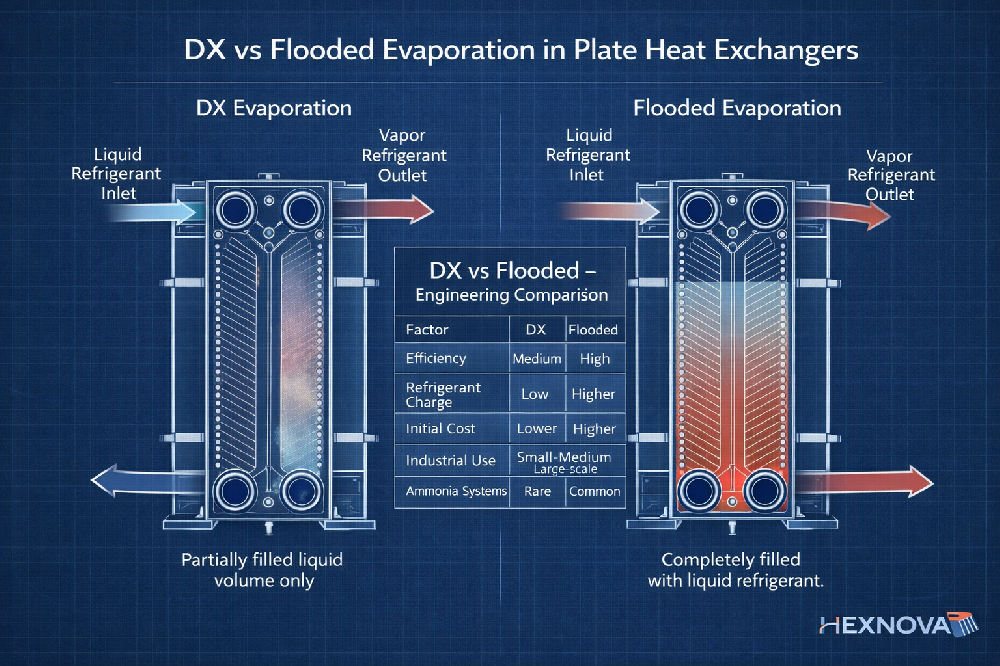
Evaporators
The
mixture of liquid and
refrigerant gas flows in
at bottom left. Gas
flows out at top left.
Water inlet is at the
top right and water
outlet at bottom right.
Connect water and
refrigerant for
countercurrent flow in
most cases. Place the
expansion valve near the
inlet connection. The
valve should be of
slightly higher capacity
than the unit, and
should have an external
pressure equalizing
connection to avoid
unnecessary heating. The
sensor bulb located on
the suction side should
be insulated from
ambient air. It must be
sensitive enough to
respond quickly to
changes in gas temperature. Allow at
least 500 mm between
bulb and the refrigerant
outlet connection. Pipe
diameter between the
expansion valve and the
brazed exchanger should
be the same as that of
the liquid line. Solder
connections to the
refrigerant side when
using Baode Brazed
Heat Exchangers as
evaporators. (See
Fig. 8)

Additional Information
on Refrigeration
Applications
a. When operating
temperatures are low,
insulate the unit to
keep condensation from
freezing on the outer
surface of the plate
pack.
b. Use quick-acting
controls for most
refrigeration
applications.F
Start-up Procedures
1. Close all isolation
valves.
2. Fill and vent the
coldest circuit first.
3. Start circulation of
the cold circuit,
opening isolation valves
gradually.
4. Repeat the process
with the hot circuit.
5. Start automatic
control regulation.
6. In steam systems,
drain the steam circuit
before opening steam
valves. This precaution
helps reduce the chance
of water hammer and
damage to the exchanger.
Shut-down Procedures
1. Close down the hot
circuit by slowly
adjusting the control
valve. Maintain full
flow on the cold
circuit.
2. When the control
valve is fully closed,
switch off the pump.
3. Slowly close down the
cold circuit, and then
switch off the pump.
4. Close all isolation
valves.
5. When the unit is
cool, drain it
completely.
Cleaning
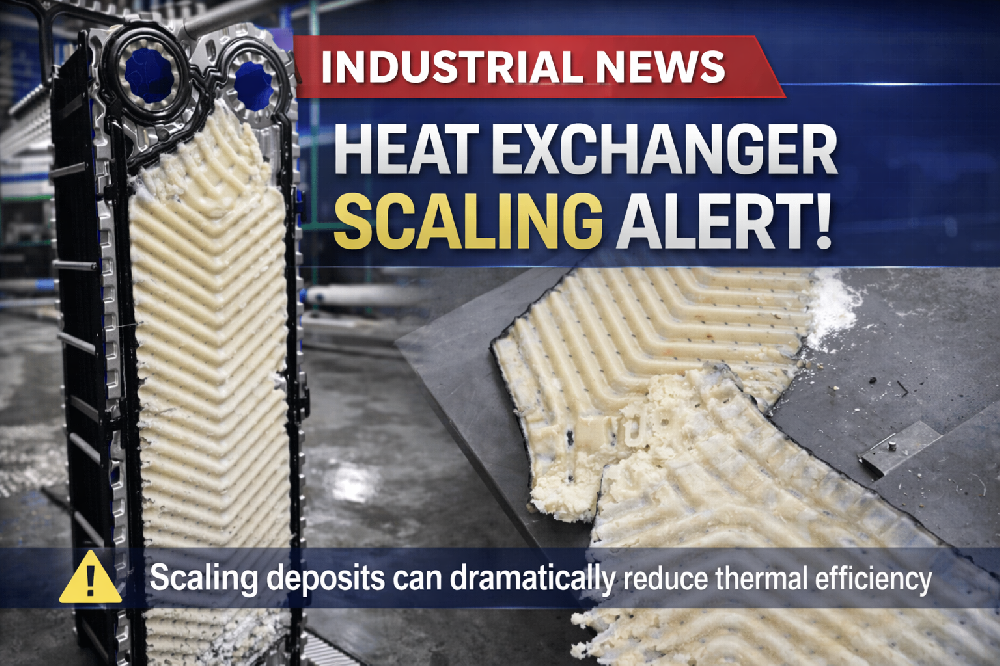
When the
likelihood of fouling is
high (for instance, when
hard water is used),
clean the exchanger by
circulating a cleaning
liquid through it. Use a
tank with a weak acid
for this clean-in-place
(CIP) process. A
five-percent solution of
phosphoric acid is a
safe an effective choice
for most units. If the
exchanger is cleaned
frequently, use a
five-percent solution of
oxalic acid. For best
results, the cleaning
solution flow rate
should be at least 1.5
times the normal flow
rate, preferably in
backflush mode. Before
restarting, flush the
unit with plenty of
fresh water to purge any
remaining acid. Clean at regular intervals. (See
Fig. 9)

¡¡ |