
Green Hydrogen Heat Exchanger Applications
Green hydrogen systems rely on precise thermal management. Whether the project involves PEM electrolysis, alkaline electrolysis, hydrogen compression, deionized water circulation, hydrogen purification, cooling skids, renewable power integration, or hydrogen-related thermal recovery, heat exchangers are essential for controlling operating temperature, protecting equipment, and improving system efficiency.
In practical green hydrogen plants, heat exchangers are used for electrolyzer cooling loops, deionized water heat rejection, stack temperature control, rectifier and power electronics cooling, hydrogen compressor cooling, balance-of-plant thermal management, and process side cooling or heat recovery. Because these duties vary in cleanliness, pressure, water quality, and service conditions, only the exchanger types that genuinely fit hydrogen production systems should be emphasized.
Why Heat Exchangers Matter in Green Hydrogen Systems
Hydrogen production by electrolysis is an electrochemical process, but the real plant still depends on thermal control. Stable temperature directly affects electrolyzer efficiency, stack life, water management, and system reliability.
In PEM and alkaline electrolyzer systems, heat is generated during operation and must be removed efficiently to keep the stack within its optimal temperature window. Cooling loops often circulate deionized water, process water, or secondary coolant, and the exchanger becomes the interface that transfers this heat safely to a utility loop. If cooling performance is poor, stack efficiency can fall and long-term durability may be affected.
Beyond the electrolyzer stack itself, green hydrogen plants may require heat exchangers for hydrogen compressor cooling, rectifier cooling, water treatment support, process side condensate handling, and integration with thermal storage or renewable energy loops. This creates strong long-tail SEO opportunities such as electrolyzer cooling heat exchanger, PEM electrolyzer heat exchanger, alkaline electrolyzer cooling system, hydrogen compressor cooler, deionized water heat exchanger, and green hydrogen thermal management.
Typical Green Hydrogen Goals
- Maintain stable electrolyzer stack temperature
- Protect hydrogen production efficiency and durability
- Support deionized water and secondary cooling loop isolation
- Cool compressors, rectifiers, and auxiliary equipment
- Improve renewable energy integration and system stability
- Reduce thermal stress in hydrogen production equipment
How Heat Exchangers Support Green Hydrogen Systems
In hydrogen production systems, heat exchangers usually operate as controlled interfaces between the electrolyzer or auxiliary hot stream and the cooling or utility side.
Electrolyzer Generates Heat
During hydrogen production, the stack and associated power equipment generate heat that must be removed to keep the process stable.
Cooling Loop Collects Heat
A deionized water loop or secondary coolant loop absorbs heat from the electrolyzer stack, balance-of-plant components, or power electronics.
Heat Is Transferred Safely
The heat exchanger transfers this thermal load to a utility water loop, chilled water system, or another controlled cooling circuit without contaminating the process side.
Auxiliary Equipment Is Protected
Compressors, rectifiers, hydrogen drying or gas treatment skids, and other support systems use exchangers to maintain safe operating temperatures.
System Efficiency Is Stabilized
Good thermal management helps maintain production efficiency, reduces thermal stress, and supports long-term reliability of the green hydrogen plant.
Typical Green Hydrogen Applications
Green hydrogen thermal management includes both core electrolyzer cooling duty and a range of auxiliary heat transfer duties around the plant.
PEM Electrolyzer Cooling
PEM electrolyzer systems use heat exchangers to control stack temperature, stabilize water loop conditions, and improve thermal consistency.
Alkaline Electrolyzer Cooling
Alkaline hydrogen production systems require cooling and thermal management across electrolyte-related or secondary cooling circuits.
Deionized Water Loop Heat Rejection
DI water and clean secondary loops often need compact, efficient, and contamination-safe heat transfer to utility-side systems.
Hydrogen Compressor Cooling
Compressor stages and associated auxiliaries generate heat that must be removed to protect performance and downstream hydrogen handling systems.
Rectifier and Power Electronics Cooling
Green hydrogen plants using high electrical input often require exchanger-based cooling for rectifiers, converters, and electrical support equipment.
Hydrogen Plant Utility Integration
Heat exchangers can also support thermal storage, renewable power integration, process side cooling, and utility water interface duty in hydrogen projects.
Which Heat Exchanger Types Are Used in Green Hydrogen?
Green hydrogen heat exchanger selection depends on water quality, cleanliness, pressure, compactness, serviceability, material compatibility, and whether the duty is stack cooling, auxiliary cooling, or process-side hydrogen plant thermal management.
| Heat Exchanger Type | Typical Green Hydrogen Duty | Main Advantage |
|---|---|---|
| Gasketed Plate Heat Exchanger | Electrolyzer cooling skids, utility water interface, clean loop thermal transfer, openable maintenance duty | High efficiency, compact footprint, easy opening for inspection and cleaning |
| Copper Brazed Plate Heat Exchanger | Compact hydrogen cooling skids, secondary coolant loops, small integrated thermal management systems | Compact construction and strong performance for closed-loop cooling duty |
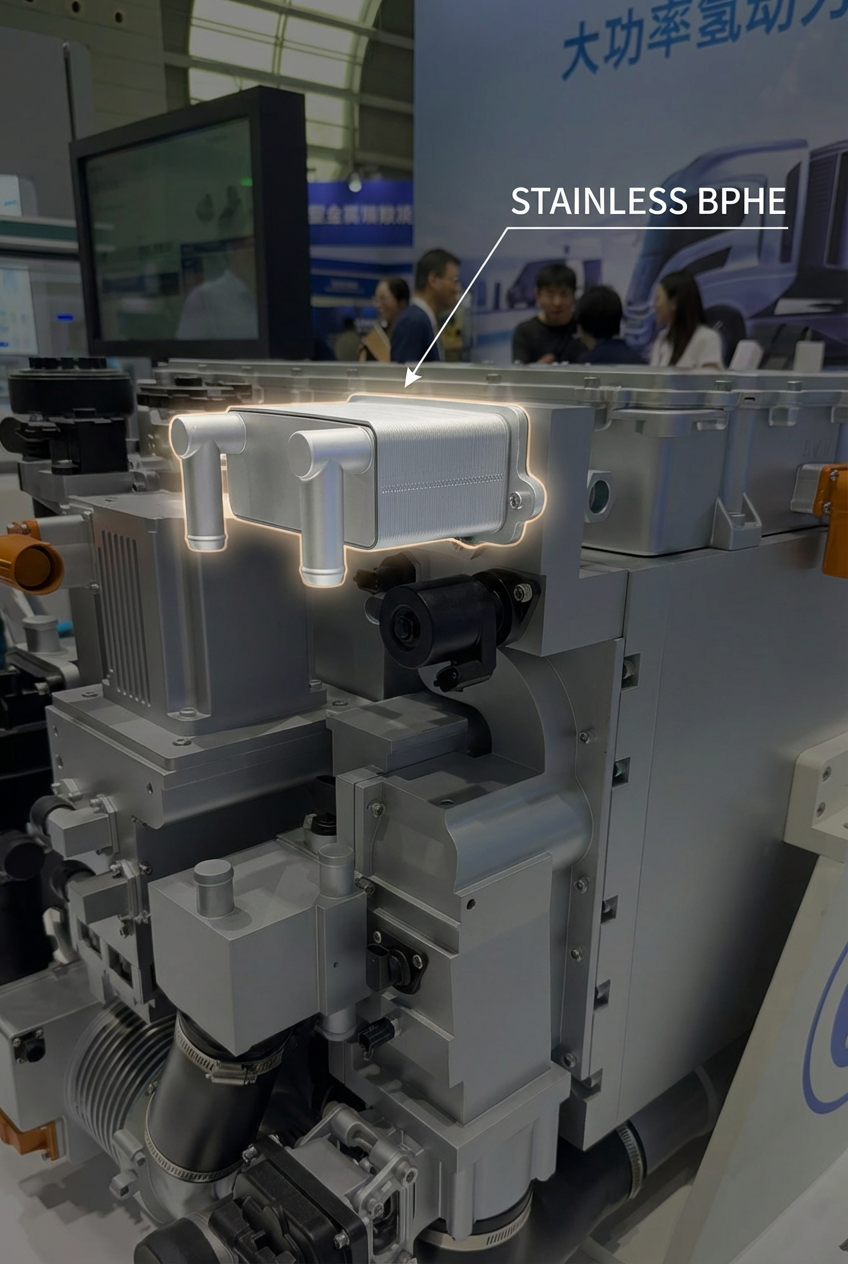
| Stainless Brazed PHE | Copper-free or cleaner duty requirements, selected DI water or special quality cooling circuits | Compact stainless-based construction for cleaner and more specific service requirements |
| Semi-Welded Plate Heat Exchanger | Green hydrogen systems with one more demanding medium, sealed-side service, special process loop duty | Plate efficiency with stronger resistance for one demanding side |
| Fully Welded PHE | Higher pressure or more severe hydrogen plant thermal duty, gasket-limited service, compact industrial loops | Welded construction for more demanding operating conditions |
| Shell and Plate Heat Exchanger | Compact higher-pressure cooling or process-side hydrogen thermal management systems | Plate efficiency combined with shell-side mechanical strength |
| Shell & Tube Heat Exchanger | Hydrogen compressor cooling, rugged auxiliary cooling, larger utility loops, more industrial service conditions | Robust design, broad mechanical flexibility, and proven industrial reliability |
| Plate and Block Heat Exchanger | More demanding compact welded industrial hydrogen plant heat transfer duty | High-integrity welded structure for severe compact service |
What Benefits Do Heat Exchangers Bring to Green Hydrogen Projects?
Stable Electrolyzer Operation
Proper heat transfer helps keep stack temperature within the desired operating range and supports more stable hydrogen production.
Improved System Efficiency
Better cooling and heat management help reduce unnecessary thermal losses across the hydrogen production system.
Protection of Auxiliary Equipment
Compressors, rectifiers, and hydrogen plant support systems all benefit from controlled cooling and loop isolation.
Clean Loop Separation
Heat exchangers isolate deionized water, secondary coolant, and utility water circuits while reducing contamination risk.
Flexible Plant Integration
Hydrogen plants often link with renewable power, storage, and utility systems, making exchanger-based thermal integration essential.
Longer Equipment Life
Lower thermal stress and better temperature control can support improved reliability and longer service life of hydrogen systems.
What Should Be Considered During Green Hydrogen Heat Exchanger Design?
Water Quality
Deionized water quality, corrosion sensitivity, and contamination control are critical in many hydrogen plant cooling loops.
Temperature Control Window
Electrolyzer stacks and associated equipment often need tight temperature control for stable and efficient performance.
Pressure and Compactness
Compact skids may favor brazed or plate-type solutions, while higher pressure and more severe duties may require welded or shell-side construction.
Material Compatibility
Material choice must reflect clean water duty, process compatibility, and the reliability expectations of hydrogen plant operation.
Serviceability
Some systems prioritize compact sealed construction, while others require openable exchangers for inspection and maintenance.
Integration with BOP Systems
Heat exchanger sizing should reflect the full hydrogen plant architecture, including stacks, compressors, rectifiers, water treatment, and renewable power connection.
Green Hydrogen Heat Exchanger FAQ
Why does a green hydrogen plant need a heat exchanger?
Electrolyzer systems generate heat during operation, and that heat must be removed in a controlled way to maintain efficiency, protect stack life, and stabilize plant operation.
What exchanger is commonly used for electrolyzer cooling?
Gasketed plate, brazed plate, stainless brazed, semi-welded, and shell-side exchanger types may all be used depending on loop cleanliness, pressure, compactness, and maintenance requirements.
Is deionized water compatibility important in hydrogen applications?
Yes. Water quality and contamination control are critical, so exchanger materials and construction must suit the specific hydrogen plant cooling loop requirements.
Why are only selected exchanger types included on this page?
Because not every exchanger family is equally relevant to green hydrogen. This page focuses on technologies that genuinely fit electrolyzer cooling, hydrogen compressor cooling, and hydrogen plant thermal management duty.
Need Heat Exchanger Solutions for a Green Hydrogen Project?
HEXNOVAS can help evaluate your hydrogen production application, electrolyzer cooling duty, water quality, pressure level, auxiliary cooling requirements, and maintenance expectations to recommend the right heat exchanger technology for long-term performance.
Contact HEXNOVAS


