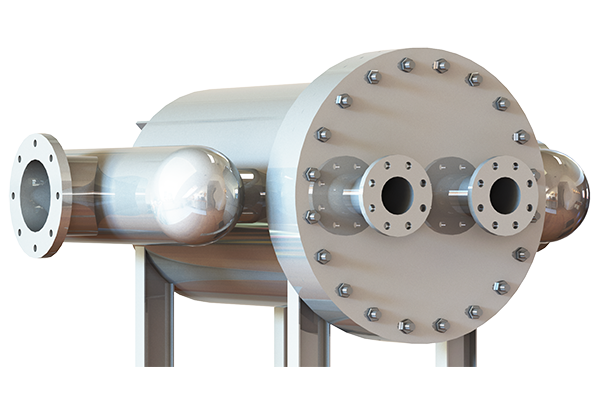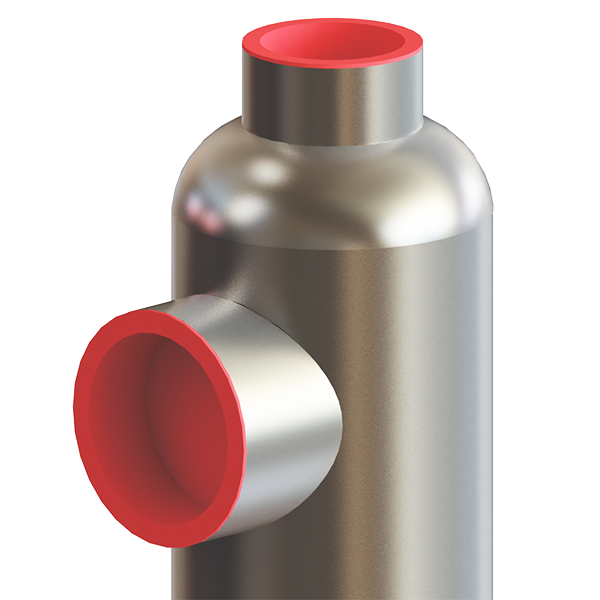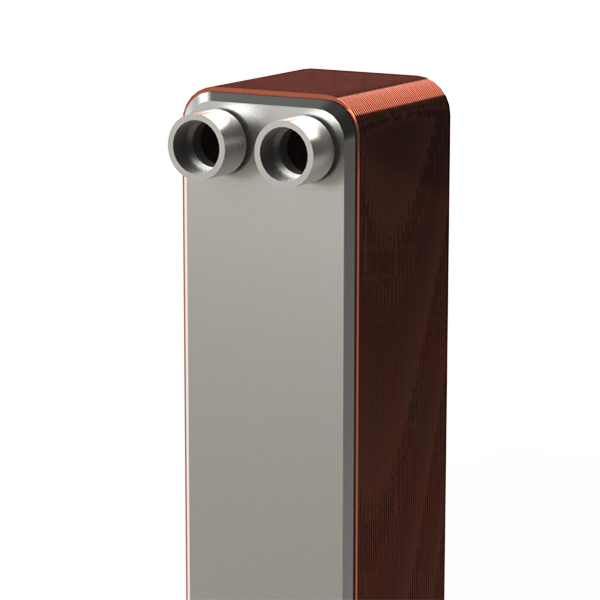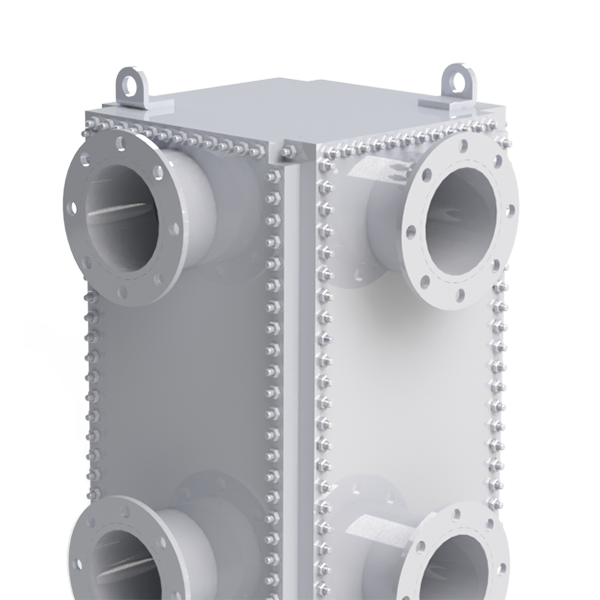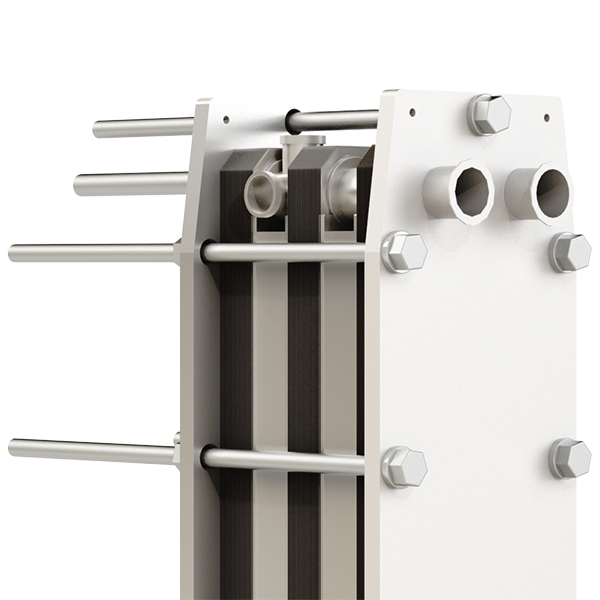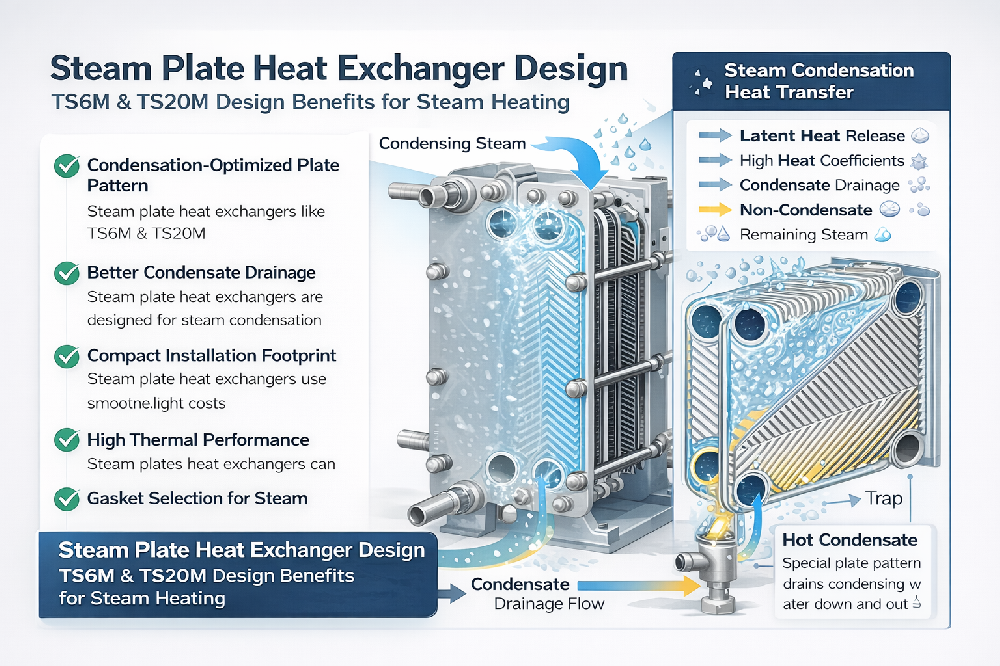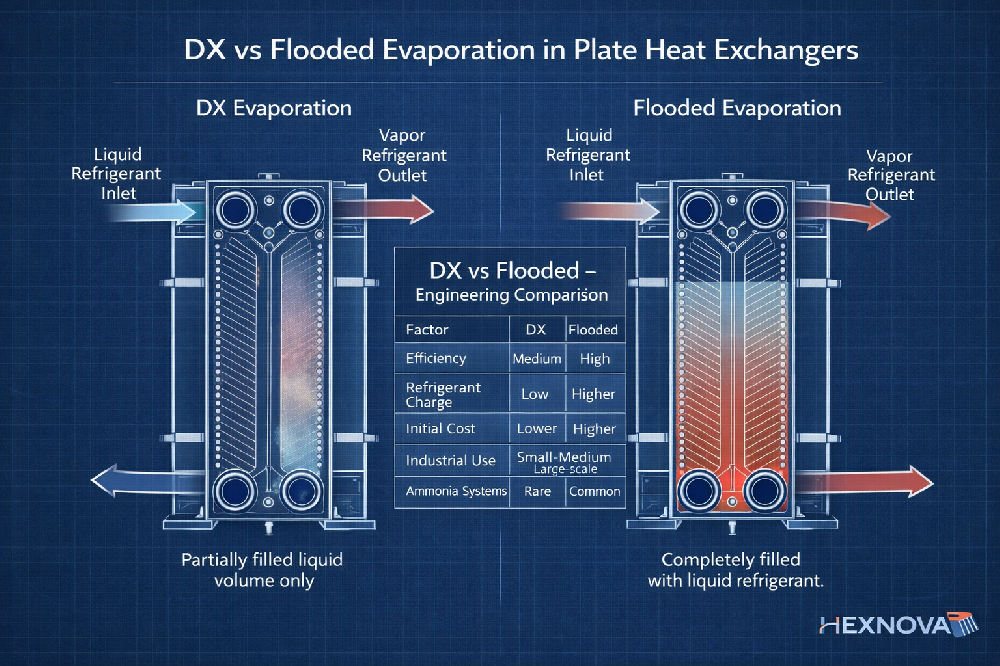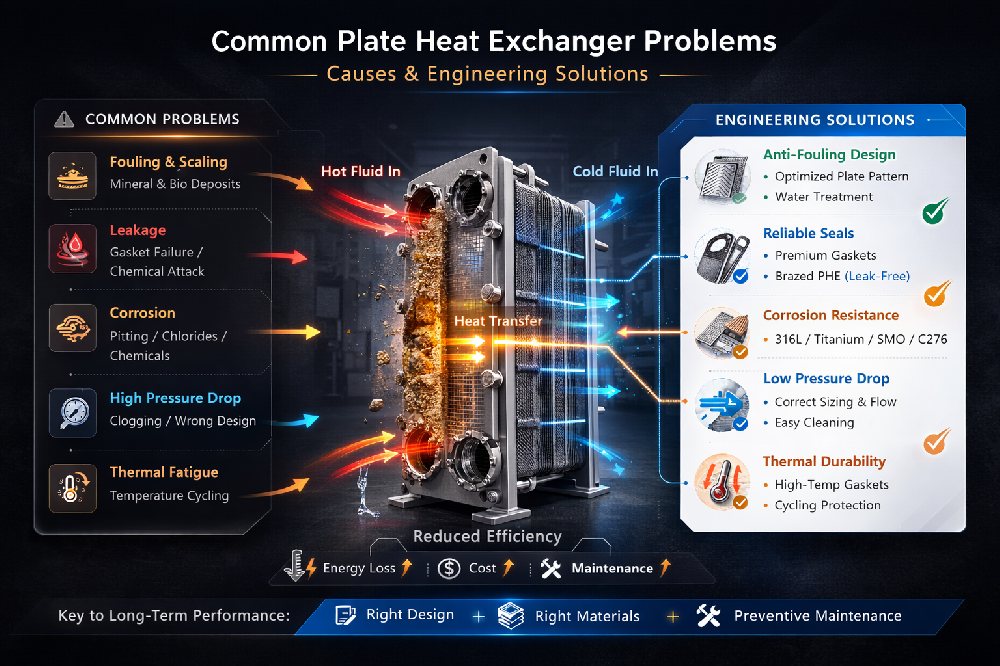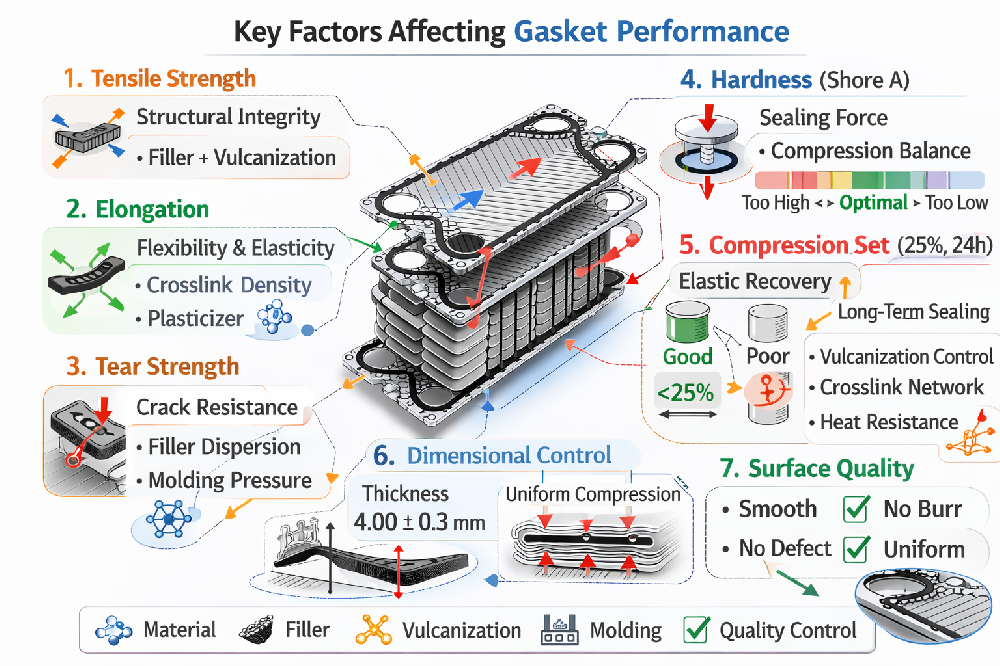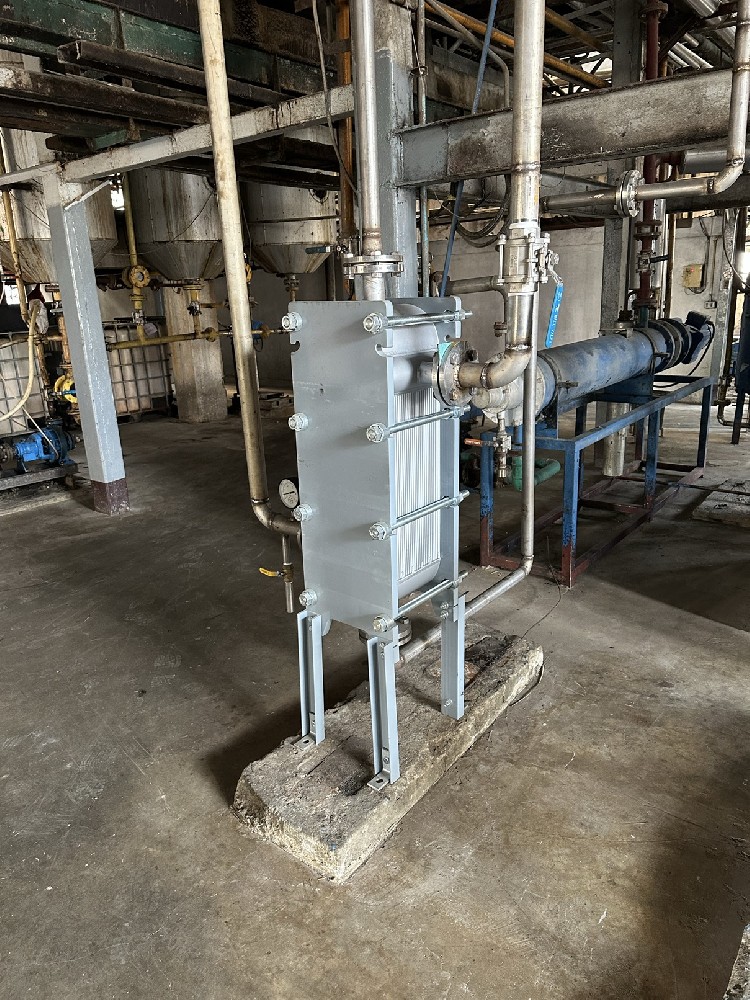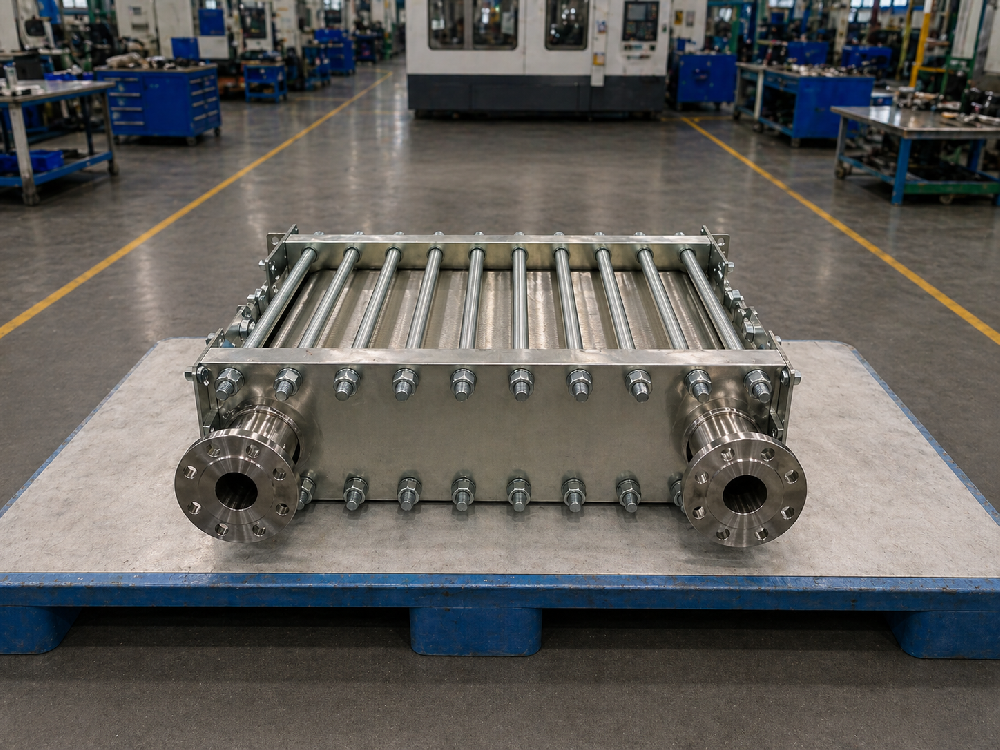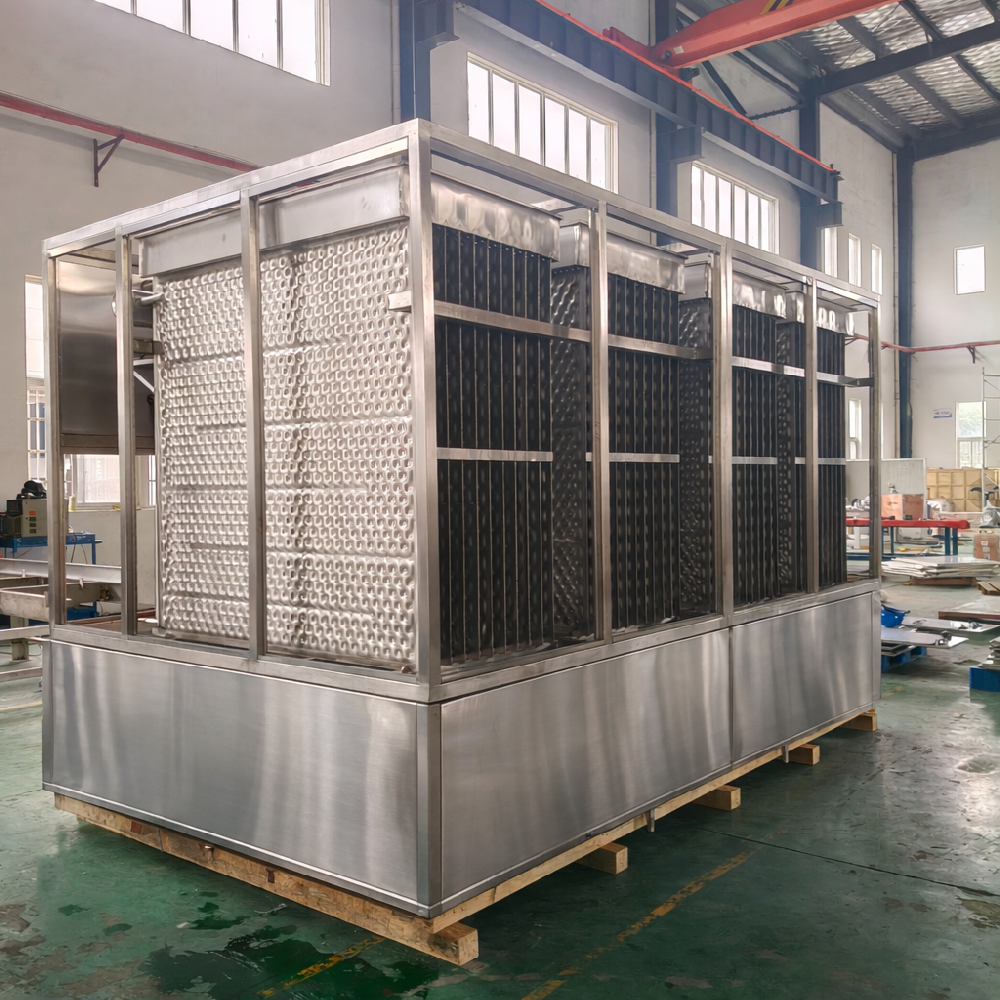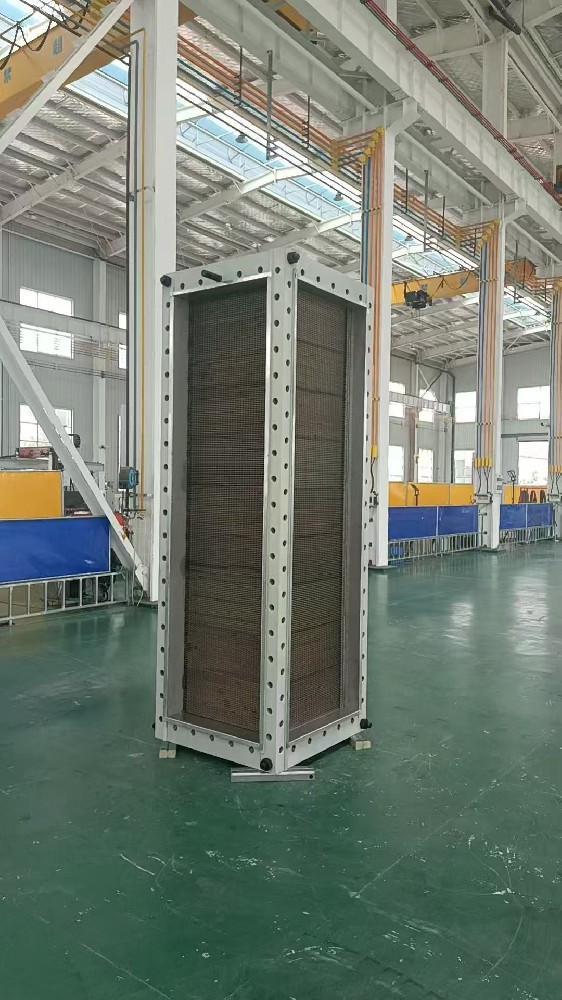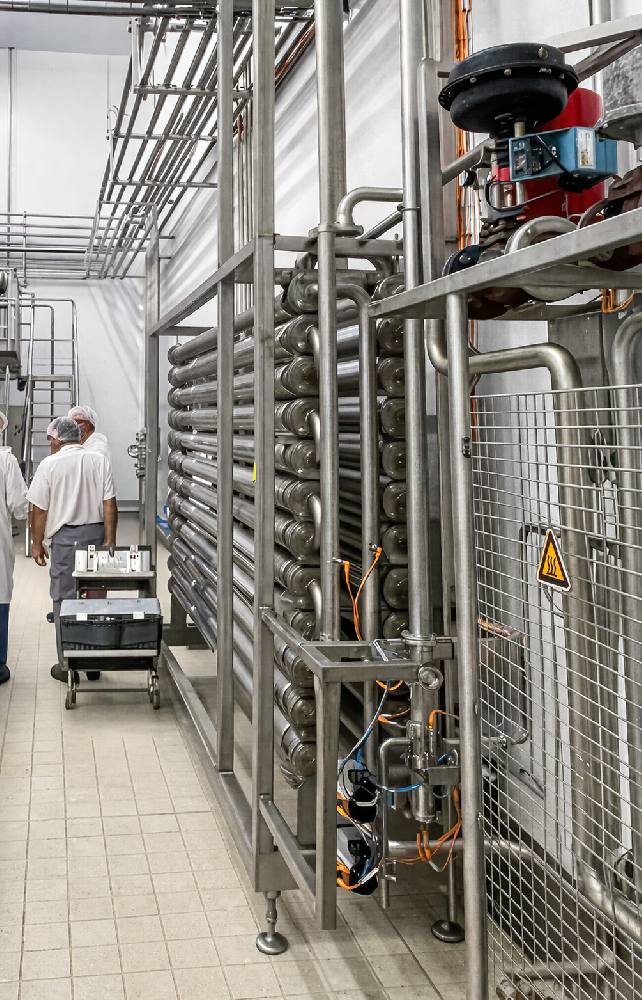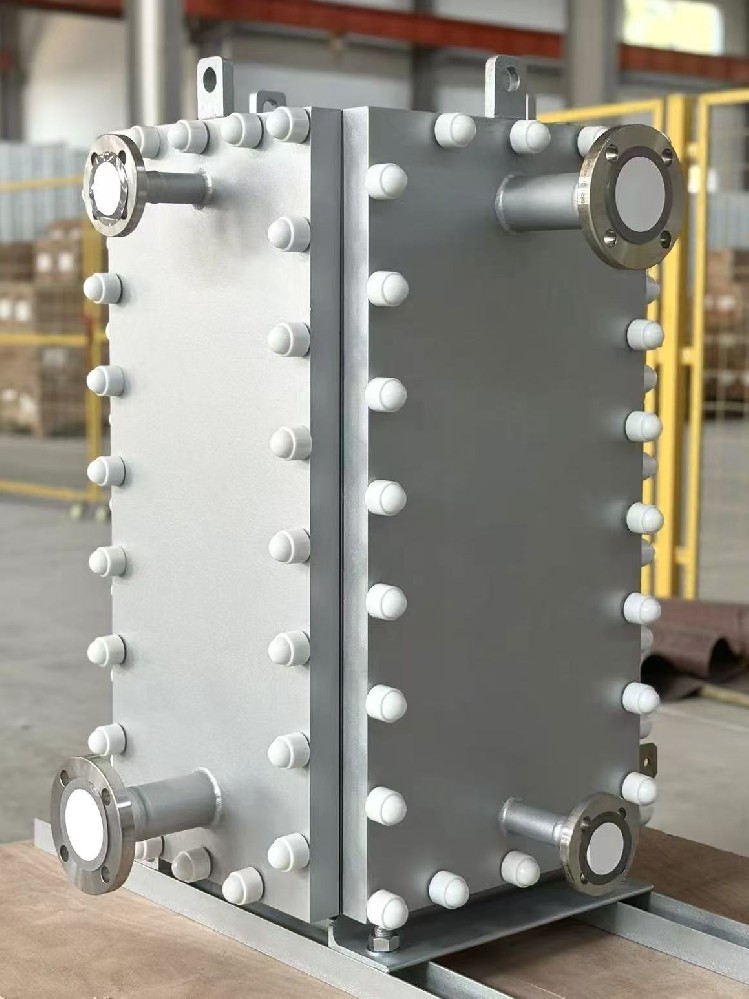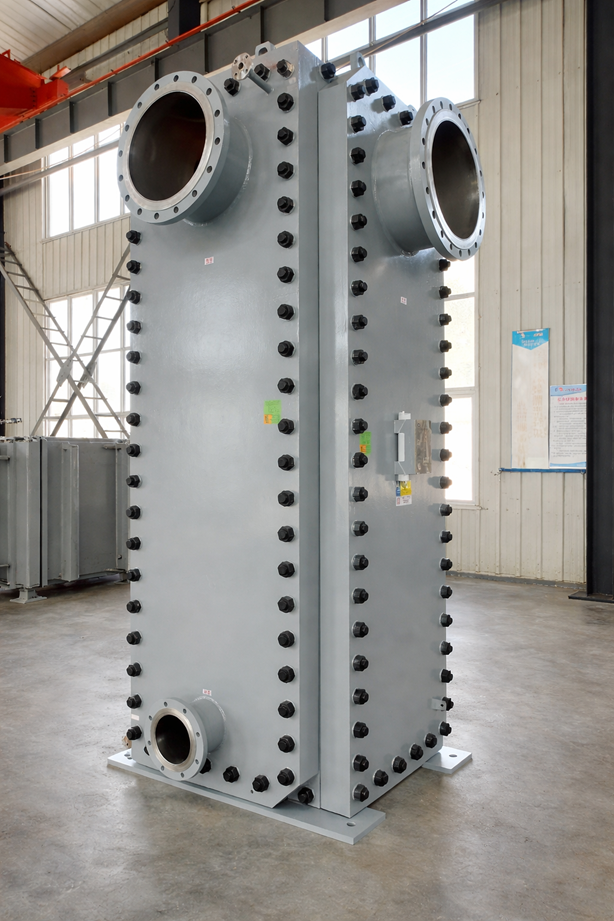
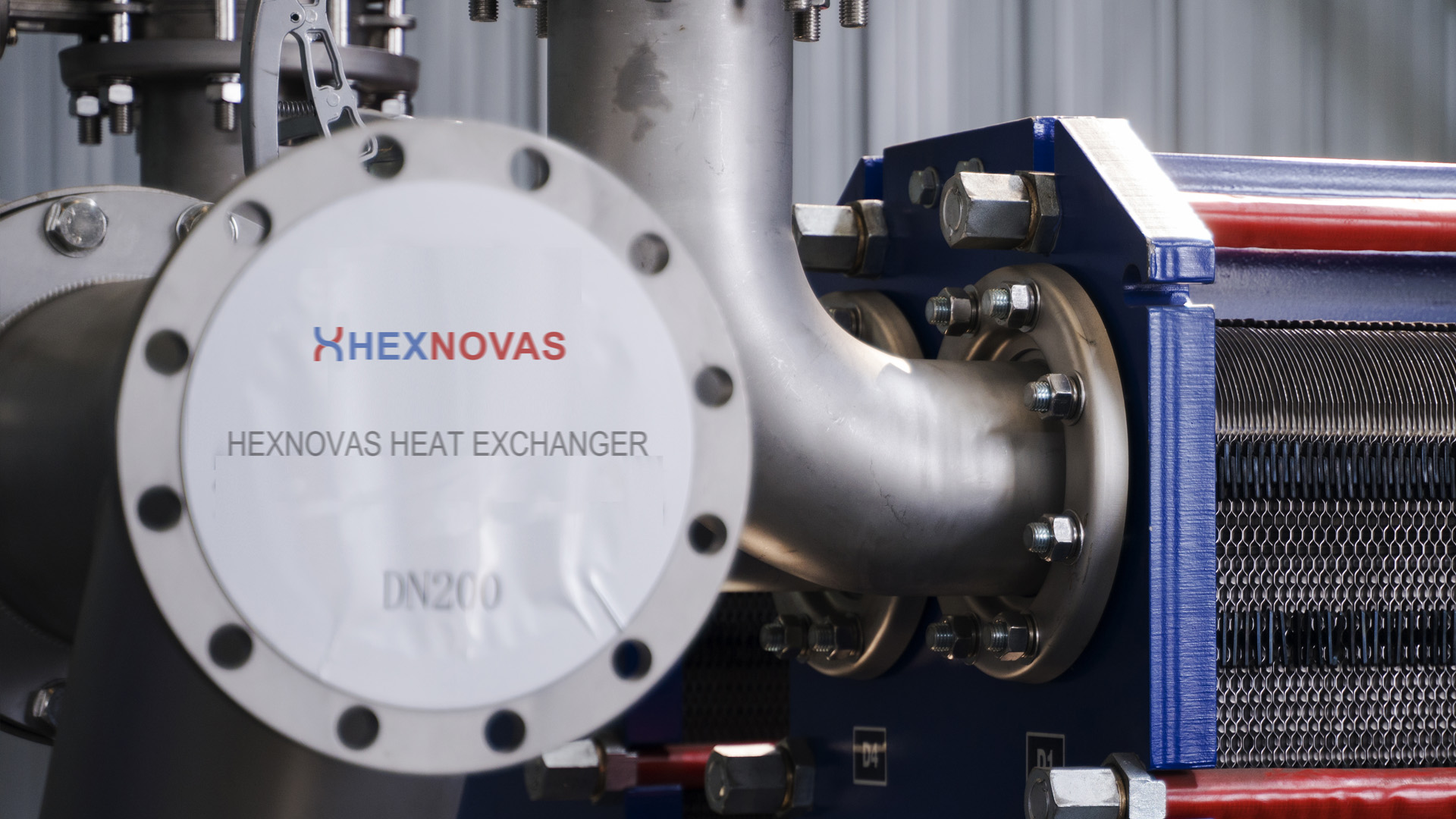
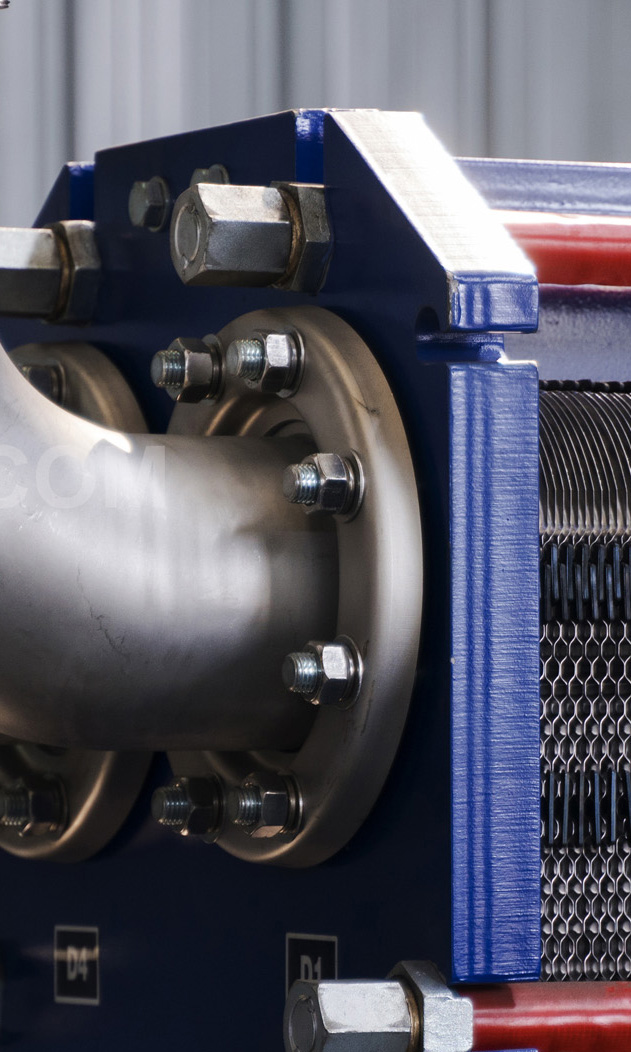
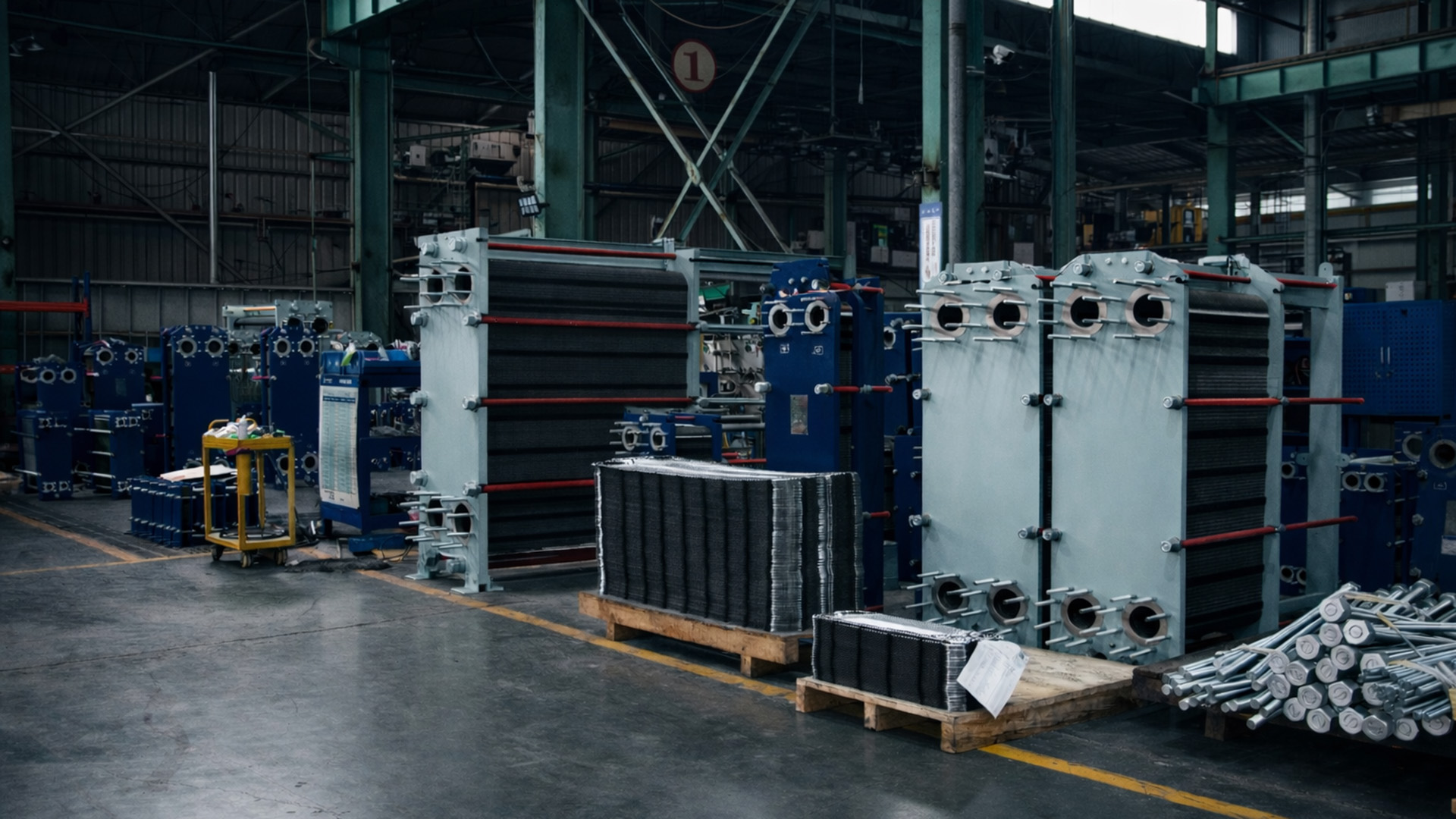
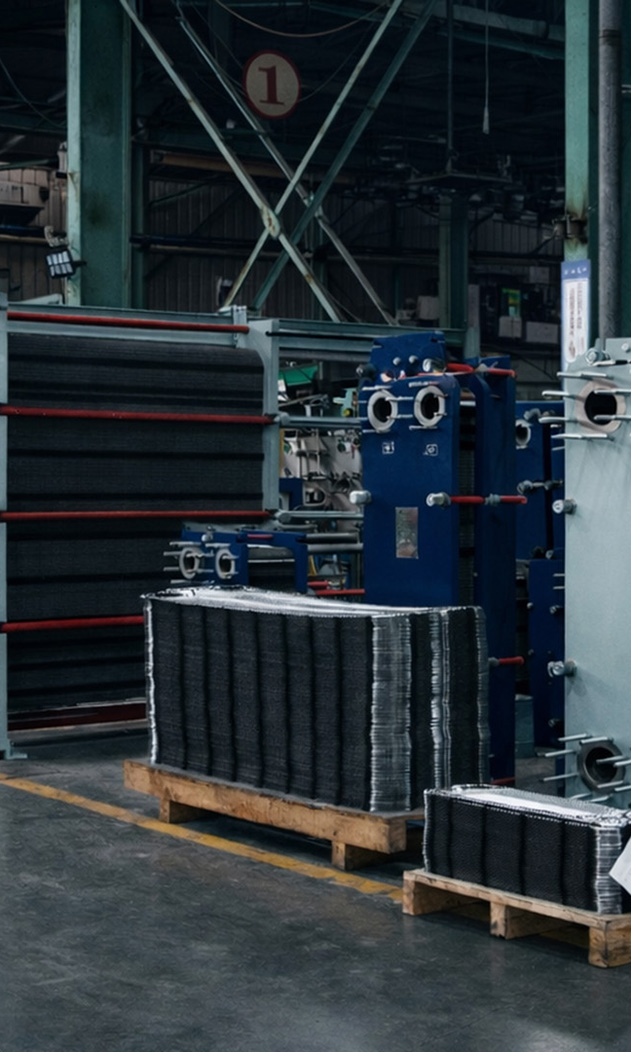
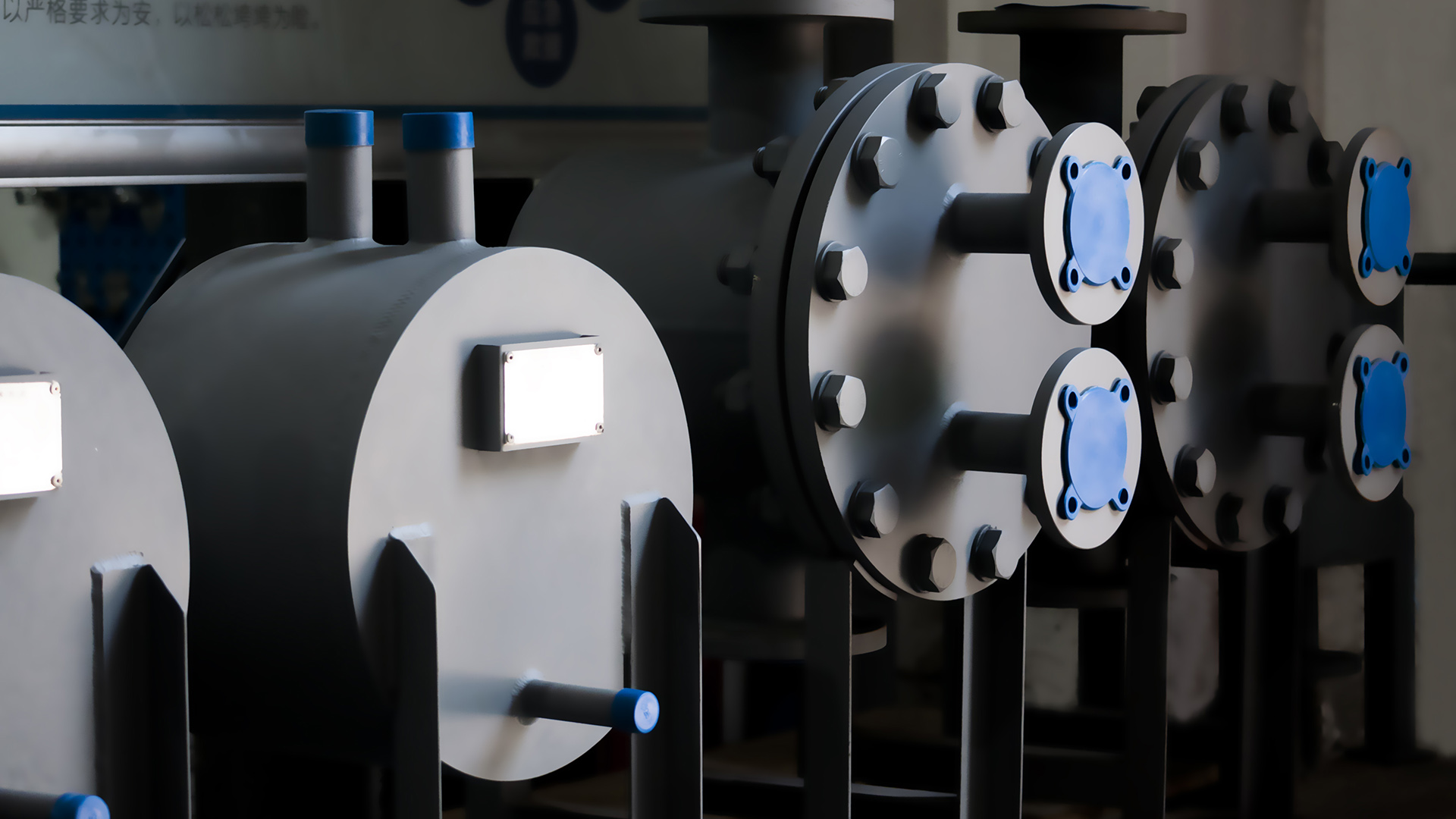
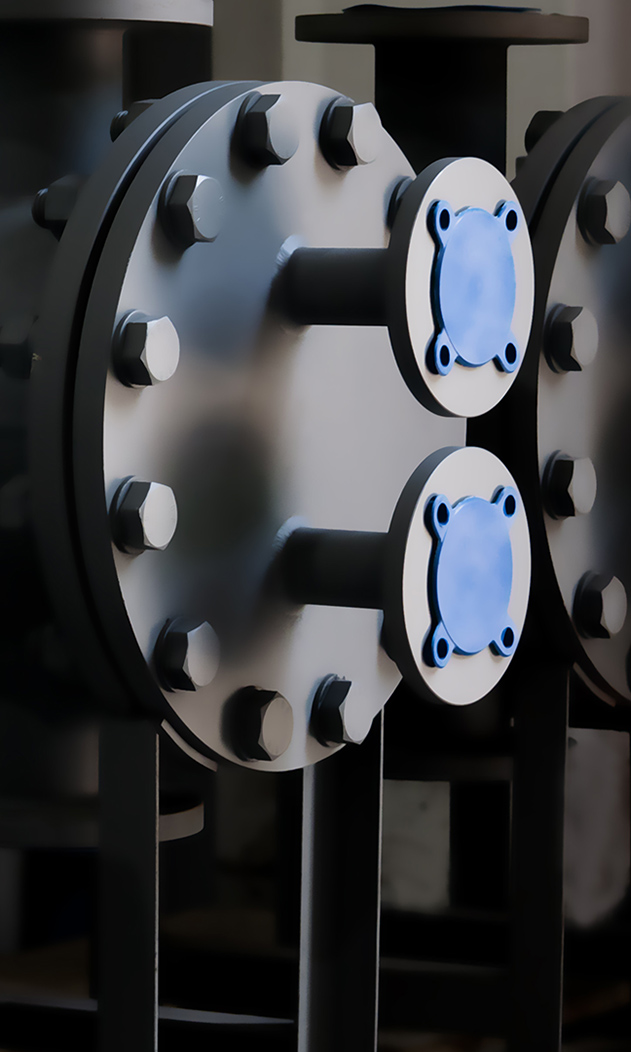
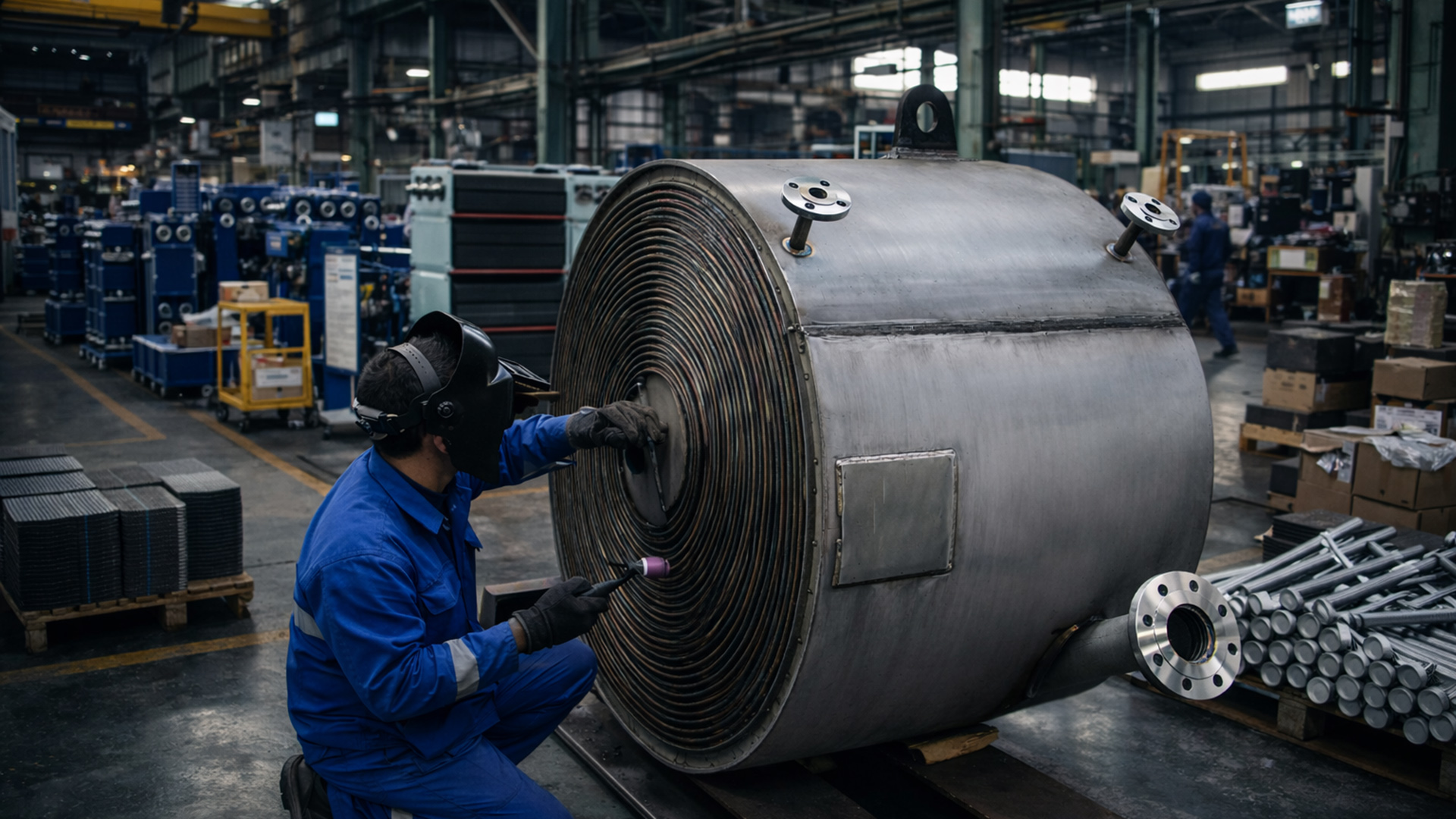
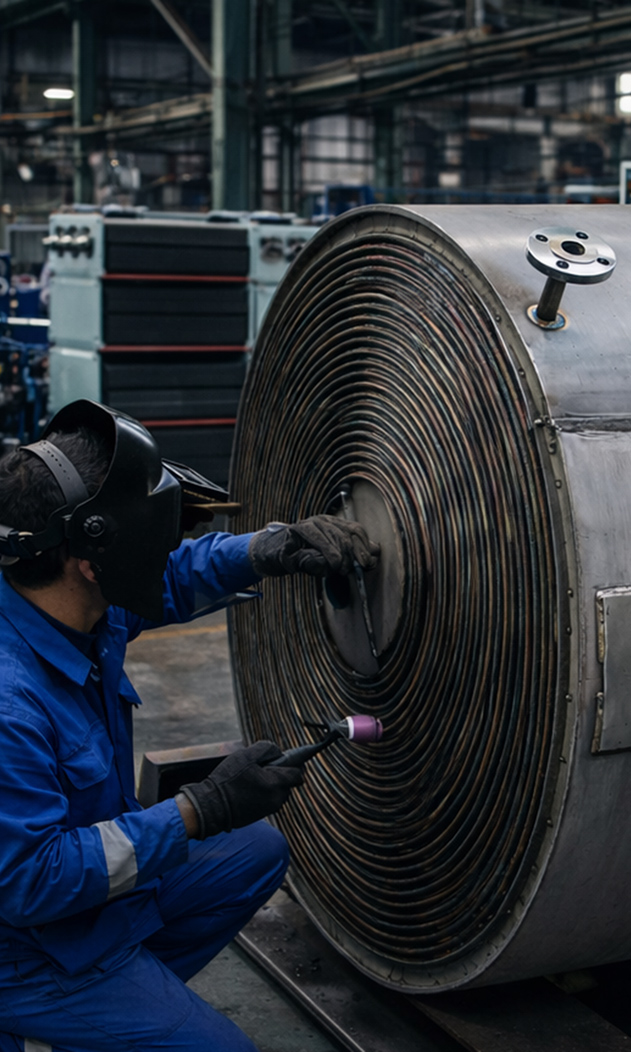
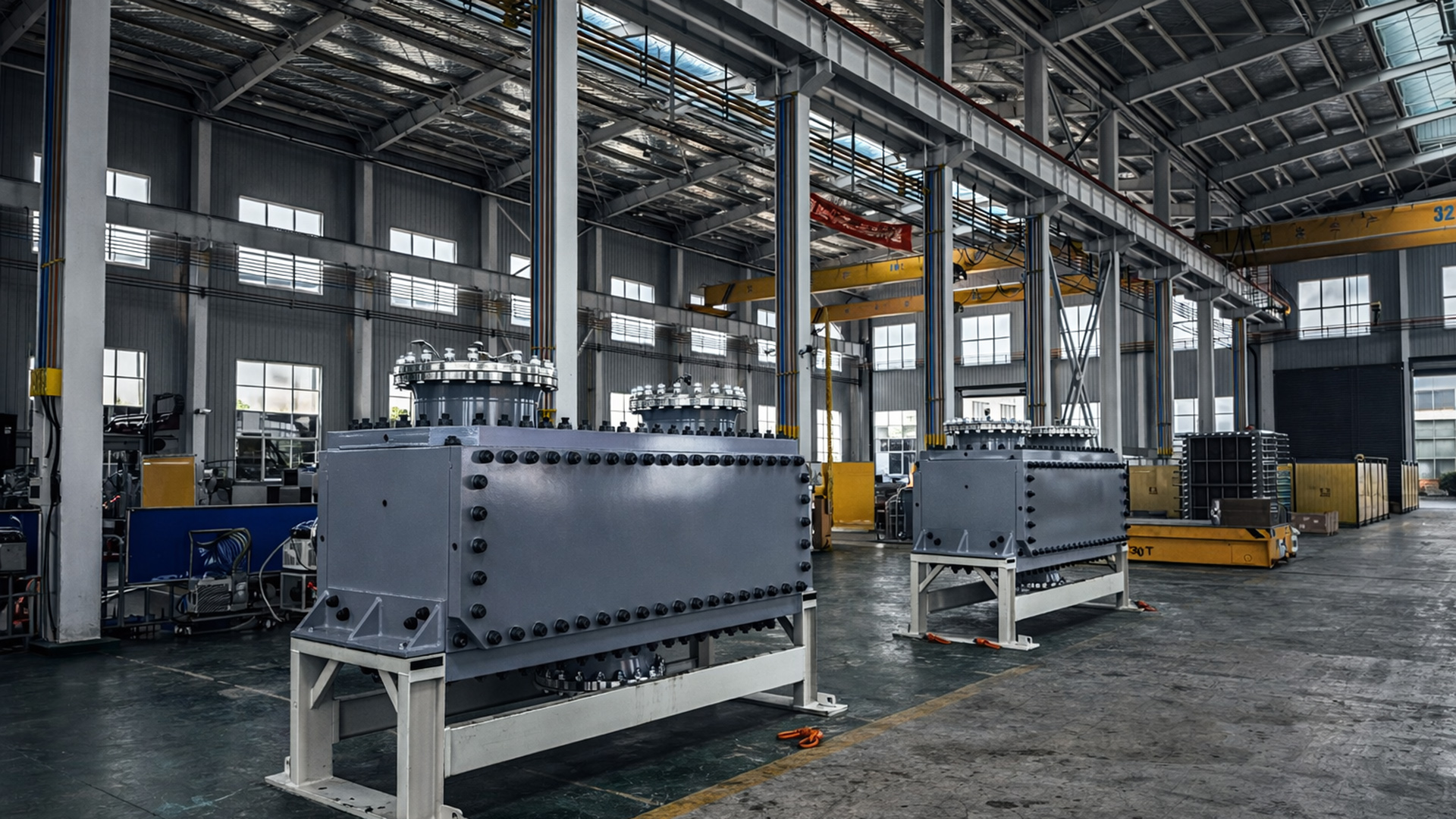
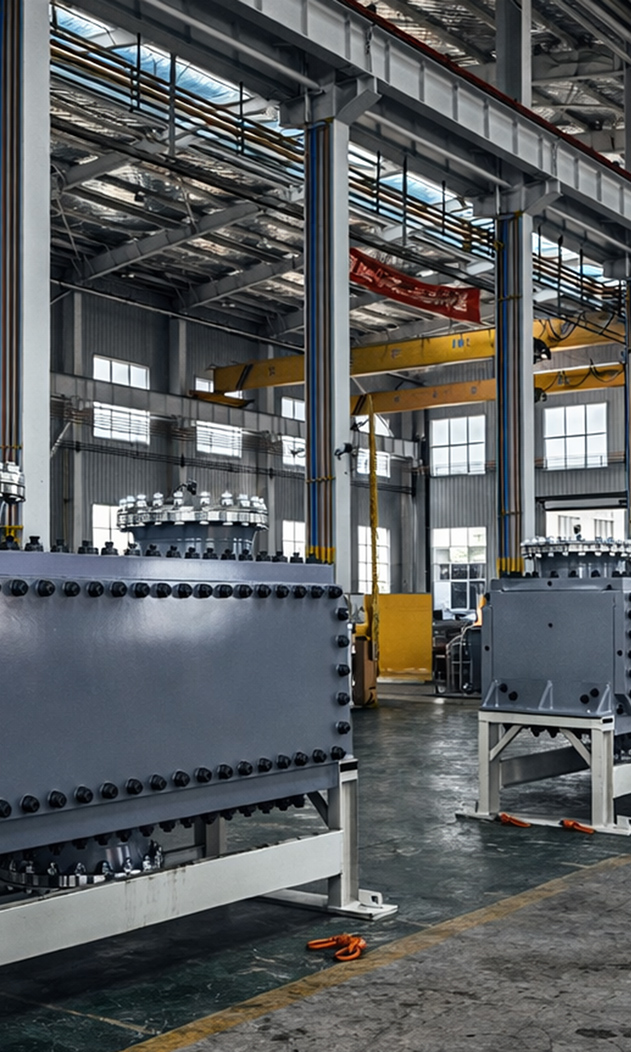
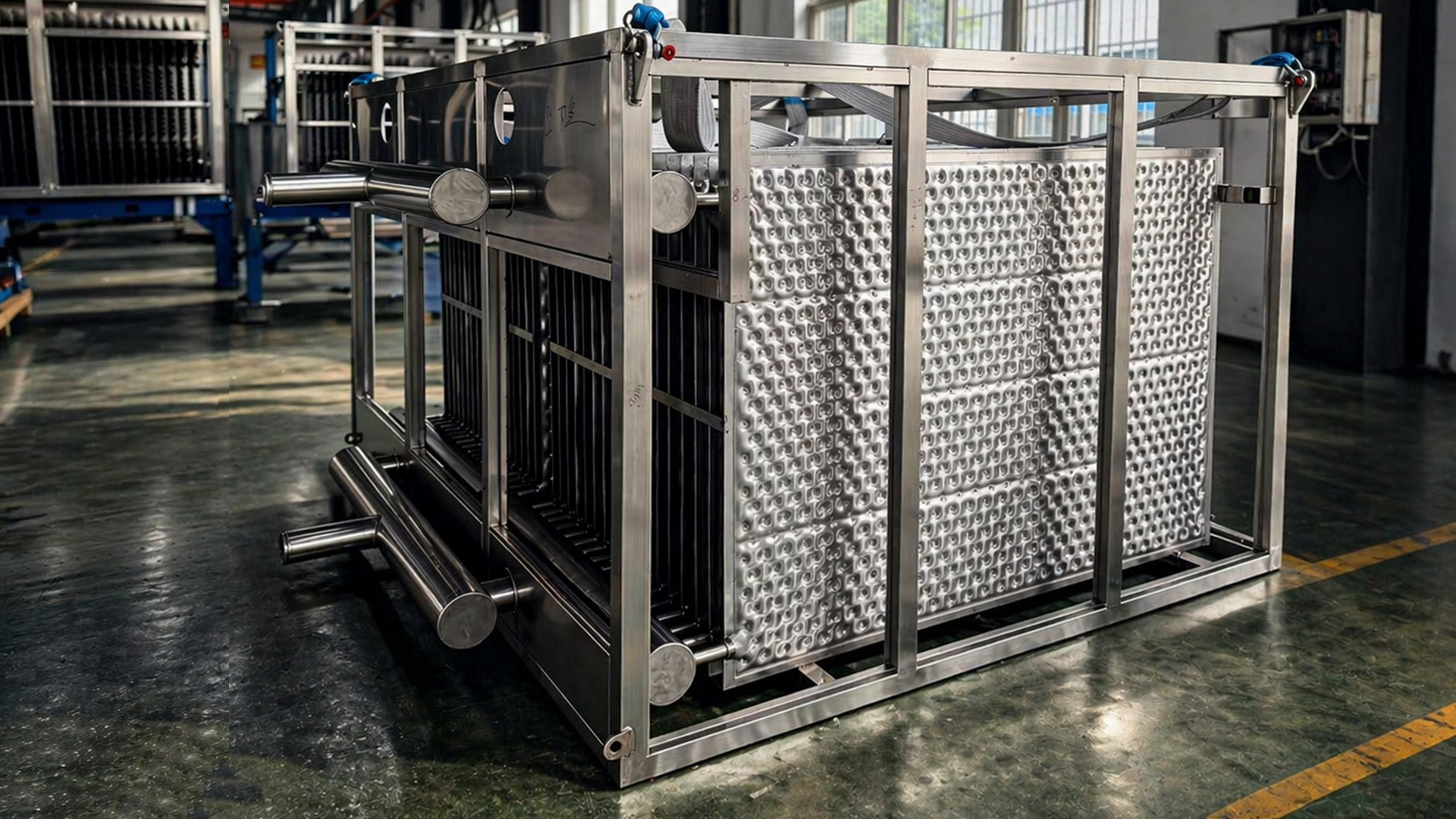
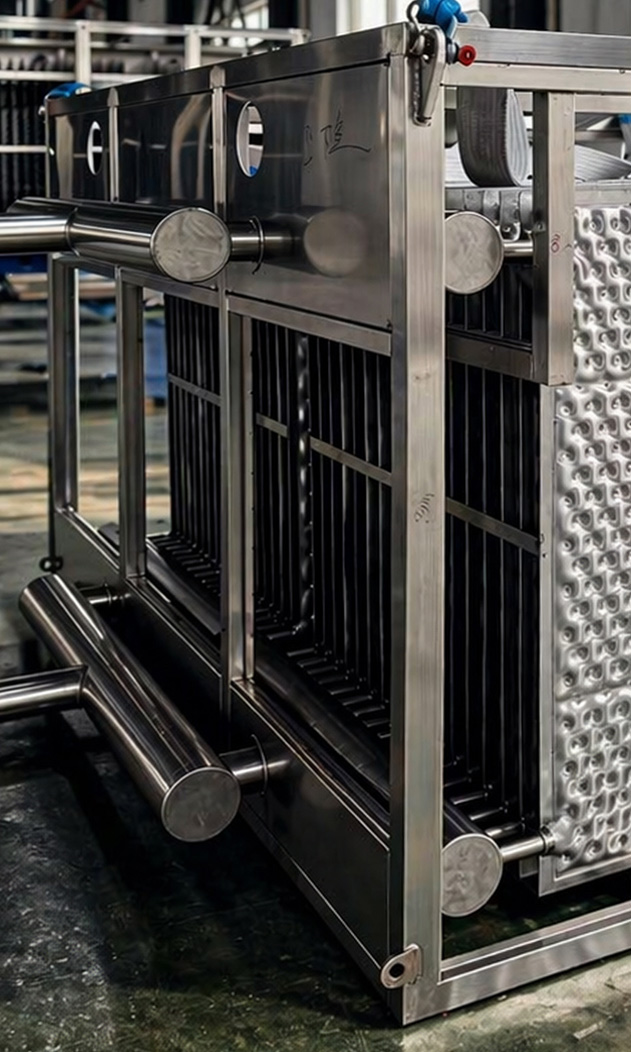

Standard design The plate heat exchanger consists of a pack of corrugated metal plates with portholes for the passage of the two fluids between which heat transfer will take place. The plate pack is assembled between a fix frame plate and a movable pressure plate and compressed by tightening bolts. The plates are fitted with a gasket which seals the interplate channel and directs the fluids into alternate channels. The number of plates is determined by the flow rate, physical properties of the fluids, pressure drop and temperature program. The plate corrugations promote fluid turbulence and support the plates against differential pressure. The frame plate and the pressure plate are suspended from an upper carrying bar and located by a lower guiding bar, both of which are fixed to a support column. Connections are located in the frame plate or, if either or both fluids make more than a single pass within the unit, in the frame and pressure plates. Advantages of the Baode Gasket Plate Heat Exchanger *Space saving and energy efficient Baode plate heat exchangers are the system builder¡¯s dream! With their compact designs they require 20¨C50% less space in your system than a comparable shell-and-tube unit. Since they require up to 80% less cooling media, you can fit smaller pumps that will consume less energy. 
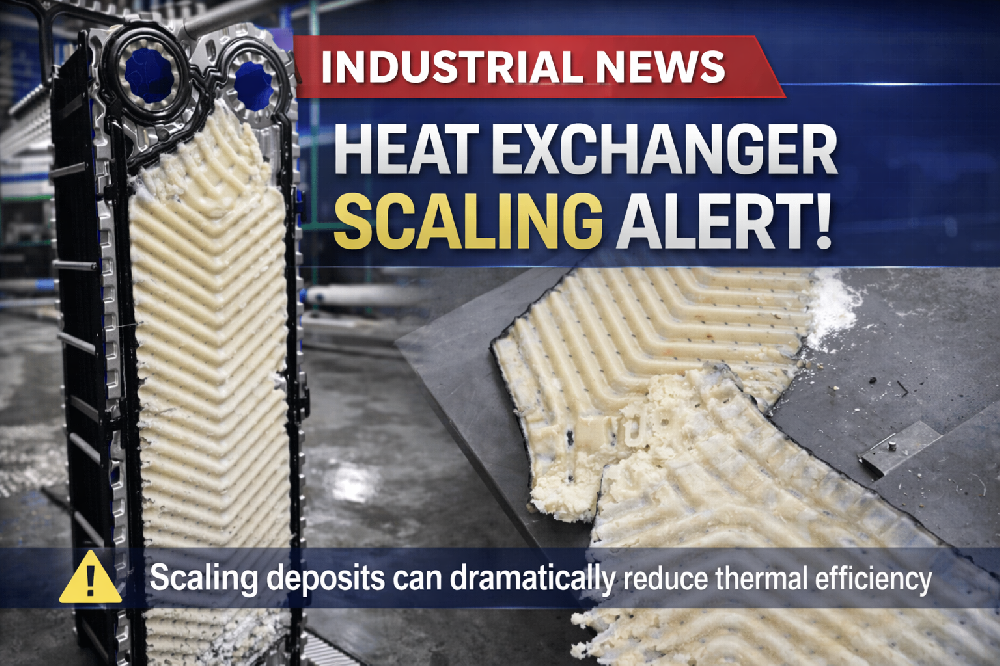
*Five times more efficient than shell-and-tube Baode plate heat exchanger offers up to five times greater heat transfer efficiency than a comparable shell-and-tube unit.The special plate pattern createsa high level of turbulence which, in combination with the low hold-up volume, ensures high heat transfer values. This, in turn, gives you the temperature control you need for efficient heating and cooling of wash liquids.*Low maintenance requirements The patented design of Baode plate heat exchangers effectively reduces fouling. When cleaning is needed, gasketed plate heat exchangers can easily be opened, giving access to the plate surfaces. Working principle Channels are formed between the plates and the corner ports are arranged so that the two media flow through alternate channels. The heat is transferred through the plate between the channels, and complete counter-current flow is created for highest possible efficiency. The corrugation of the plates provides the passage between the plates, supports each plate against the adjacent one and enhances the turbulence, resulting in efficient heat transfer.
¡¡ |